Say ‘canal’ and there’s that final vowel
Towing silence with it, slowing time
To a walking pace, a path, a whitewashed gleam
Of dwellings at the skyline. World stands still.
The stunted concrete mocks the classical.
Water says, ‘My place here is in dream,
In quiet good standing. Like a sleeping stream,
Come rain or sullen shine I’m peaceable.’
Stretched to the horizon, placid ploughland,
The sky not truly bright or overcast:
I know that clay, the damp and dirt of it,
The coolth along the bank, the grassy zest
Of verges, the path not narrow but still straight
Where soul could mind itself or stray beyond.—Seamus Heaney, “Banks of a Canal”
Seamus Heaney died on this date in 2013. Ten days before his death, he submitted the above poem, “Banks of a Canal” to the National Gallery of Ireland for inclusion in an anthology, Lines of Vision: Irish Writers on Art.
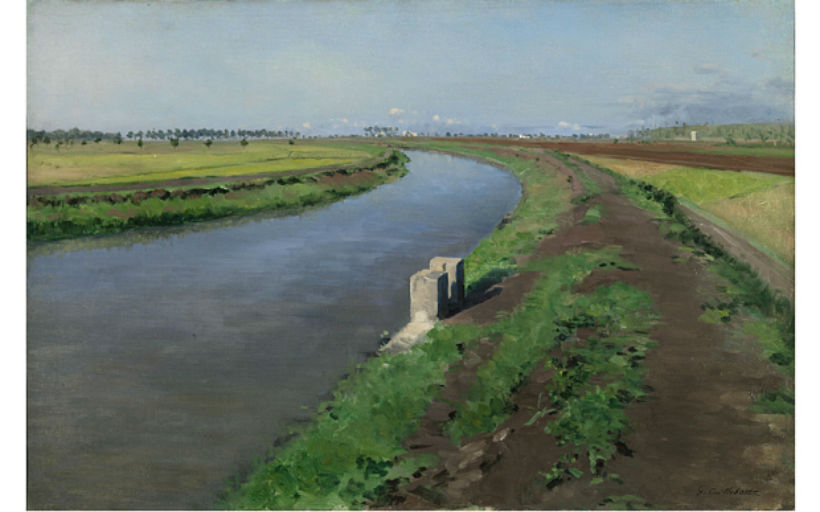
Each writer selected a work from the National Gallery and wrote a piece; Heaney chose Banks of a Canal near Naples (circa 1872) by the French artist Gustave Caillebotte, which is the painting at the top. Heaney was 74 at his death; his poetry retained its music and power: “the grassy zest / Of verges, the path not narrow but still straight / Where soul could mind itself or stray beyond.”
Read More
41.386282
-74.347017
Thank you for sharing this via one of these wonderful services:


 The Gad About Town