Today in History: September 11

September 11, 2001, was a Tuesday. Among many things, it was a Tuesday.

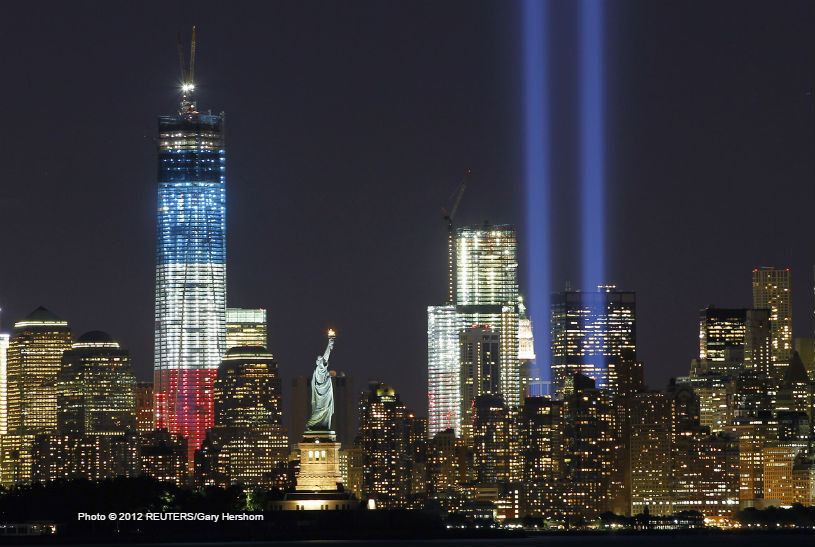
It is a day inscribed in history: four planes were crashed in a coordinated act of mass murder that ended many lives and affected the histories of this nation and many others. Repercussions are still echoing. Every year since 2002, a “Tribute in Light” has illuminated the sky above Lower Manhattan. (Seen above.)

Personal details from that day 15 years ago are etched in almost every American’s heart and memory. (For me, the memories are such that I do not visit them often. I do not feel the need to do so here or today. I had moved from New York to Iowa in May 2000, so I had lived in that great state for a year and a half. I was everyone’s token New Yorker there for the next couple weeks, had my arm touched and even had my hand shaken as if I was some sort of something from “there.” All of it was welcome. I never felt so strange and alone before.)

In mainstream media, Tuesday is the day of the week that albums are released, books are officially published, films debut in theaters.

Among the albums that were released to stores on that infamous date in 2001: Mariah Carey’s soundtrack to her movie of the same name, Glitter; God Hates Us All by Slayer; Nickelback’s Silver Side Up; Ben Folds’ solo debut Rockin’ the Suburbs; The Blueprint from Jay-Z (“H to the Izz-o, V to the Izz-A”); and “Love And Theft” from Bob Dylan.
Read More

Today in History: September 10

U.S. Patent No. 4750 was awarded 170 years ago today to Elias Howe for his “Improvement in sewing-machines.” It is the first U.S. patent for a sewing machine that employs the lockstitch method, and it is the first patent for a machine that is recognizable to anyone who has used a modern sewing machine all these years later: it placed the eye of the needle at the point, which was an ingenious innovation over the equipment that people had been using by hand for centuries, with the eye at the back of the needle; and it offered an guide and an automatic feed.

Howe was not the inventor of the sewing machine concept itself, but he was the inventor of the modern sewing machine, a device that revolutionized several industries. An early model is in the photo at top.

Howe spent many years defending his invention and his patent in the courts: He had almost no success selling his version of the sewing machine, but Isaac Singer manufactured a copy of Howe’s invention in the 1850s and sold many of them under the Singer name. (The only real difference was the name on the machine: Singer placed the word “Singer” where Howe had located his own name.) Howe eventually won royalties from Singer and recognition as the modern sewing machine’s inventor.
Read More

Today in History: September 9

“Had Mao died in 1956, his achievements would have been immortal. Had he died in 1966, he would still have been a great man but flawed. But he died in 1976. Alas, what can one say?”—a quote attributed toChen Yun

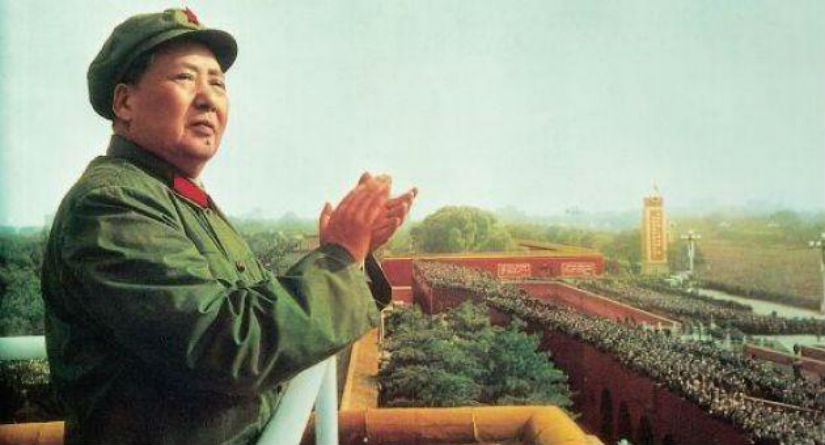
With his death 40 years ago today, Mao Zedong’s three decades in power in China came to an end. He was 82, had cardiopulmonary issues and probably had ALS along with Parkinson’s. His final appearance in public had come in May 1976. In photos from the event, a meeting with Pakistan’s leader, Mao appears already mummified. (His preserved body has been on public display in a glass coffin since 1976.)

The fact that Mao Zedong existed was one that dominated life in his nation from the 1930s until his death, when he joined the 50 million individual lives he sent to 50 million individual deaths. Theirs were the lives worth mourning.
Read More