Today in History: September 16

Asked if he had any plans as he turned 100, the old man joked, “I may go on forever. Statistics say that very few men die after the age of 100.” The old man was Amos Alonzo Stagg, and when he died in 1965 at 102, he was a somewhat forgotten figure in sports history in part because he created so many things that do not seem to us as things a person would have had to dream up. Weren’t these things always so? … He did not invent the game of football, but “all football comes from Stagg,” Knute Rockne once said.

Amos Alonzo Stagg retired as kicking coach for a junior college in Stockton, California, on this date in 1960. He was 98 years old and had been a football coach continuously since 1890. (He is seen on the cover of Time from 1958.) Almost every play formation and tactic that one may associate with football—including the huddle, the end-around play, the forward pass, the lateral pass, and even shoulder pads and pads on the goalpost legs—was an innovation Stagg developed himself or had a hand in developing in his seven decades, most of them as a head coach, and most of them as the head coach at the University of Chicago. He was the first coach to put numbers on uniforms.
Read More
Today in History: September 15

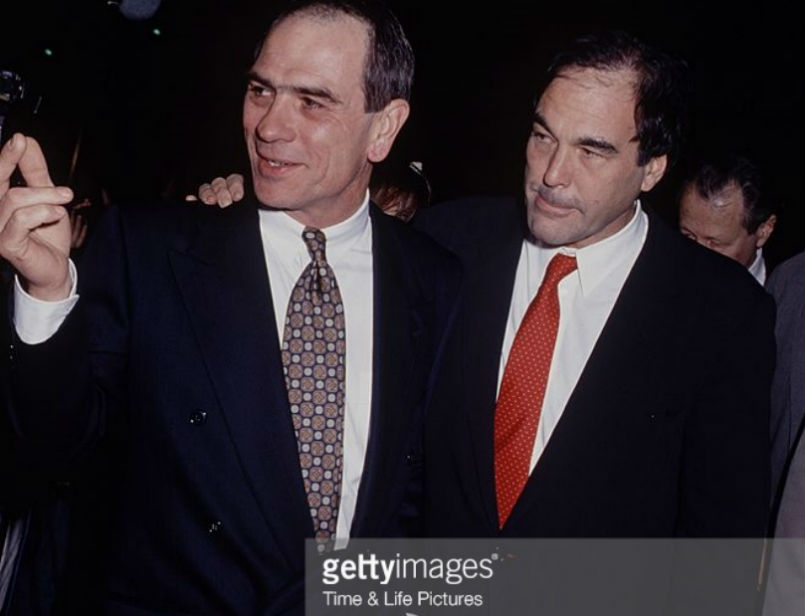
Oliver Stone has directed Tommy Lee Jones three times: in JFK, Heaven & Earth, and Natural Born Killers. There is no reason to bring this up other than they are two of American cinema’s best, and each man is 70 today. (The two are seen together at top, many years ago.)

Both Stone and Jones are having busy starts to his 80th decade: Stone’s newest film, Snowden, opens in theaters tomorrow, and Jones is in an action film in theaters right now, Mechanic: Resurrection. (Jason Statham likes using punctuation marks in his titles almost as much as I seem to.)

Tommy Lee Jones is also quite busy shooting rather hilarious ads for Suntory “Boss” coffee in Japan (video collection after the jump):
Read More

‘They are bluffing, and you must learn to bluff too’

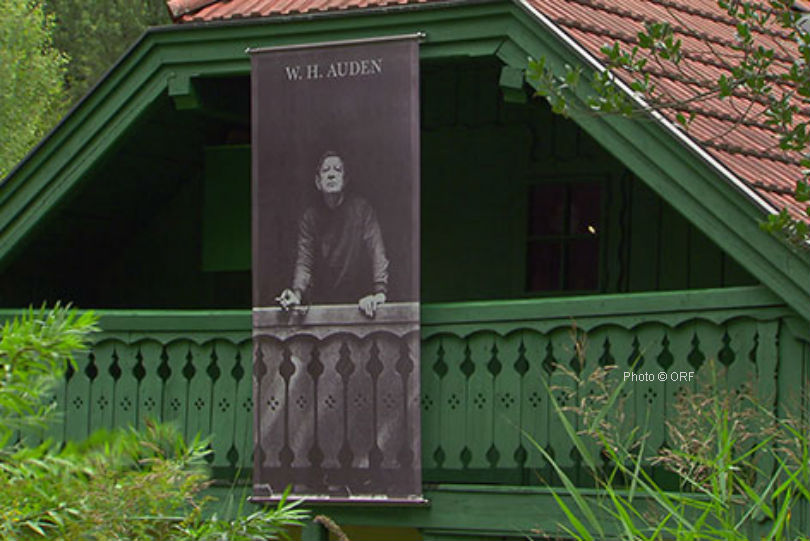
In the documentary, Tell Me the Truth About Love, W.H. Auden’s friend Thekla Clark recounts the story of one of Auden’s lovers complaining to him that he thought Auden would be more “romantic,” being a poet, after all. “But you aren’t romantic,” Clark quotes the lover telling the Auden. “You aren’t romantic at all.”

“If you want romance,” Clark quotes Auden replying, “screw a journalist.” (Except the word he used was not “screw.”)

Auden was not one to ruin a good line—or a good night—by spending it an explanation of the difference between the romantic and the sentimental.
Read More