Today in History: Oct. 3

Alfred Hitchcock is credited with coining the term “MacGuffin,” but not the thing itself, which has been around since people started telling stories to each other. In spy movies and thrillers, a MacGuffin is the object that sets the plot of the movie in motion; it’s usually a something people desire that the hero and his nemeses pursue, and that pursuit provides the film’s plot. The specific nature and form of the MacGuffin is usually unimportant to the overall plot. In plot terms, but not theological ones, the apple in Genesis is a MacGuffin.

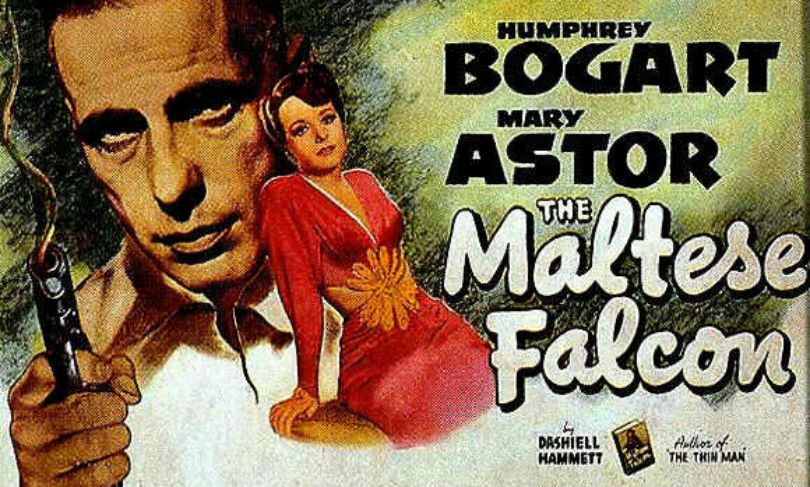
In The Maltese Falcon, which made its debut in American movie theaters 75 years ago today, Mary Astor’s character Brigid O’Shaughnessy asks Sam Spade (Humphrey Bogart) if he would (be doing what he is about to do) if (money had possibly been acquired). (How’s that for avoiding a spoiler?)

The Maltese falcon, a jewel-encrusted treasure of centuries past, or not, is an innocent bystander for the entire movie. It sure looks valuable, looks like it is worth multiple lives, double- and triple-cheating, the sacrifice of love both real and pretend. As Det. Polhaus says as he lifts it, in the second-to-last line, it sure is, “heavy. What is it?” Sam Spade replies, and this is no spoiler even though it is the final line, “The, uh, stuff that dreams are made of.”
Read More
Today in History: Oct. 2

The palm at the end of the mind,
Beyond the last thought, rises
In the bronze decor,
 
A gold-feathered bird
Sings in the palm, without human meaning,
Without human feeling, a foreign song.
 
You know then that it is not the reason
That makes us happy or unhappy.
The bird sings. Its feathers shine.
 
The palm stands on the edge of space.
The wind moves slowly in the branches.
The bird’s fire-fangled feathers dangle down.
—Wallace Stevens, “Of Mere Being,” Opus Posthumous

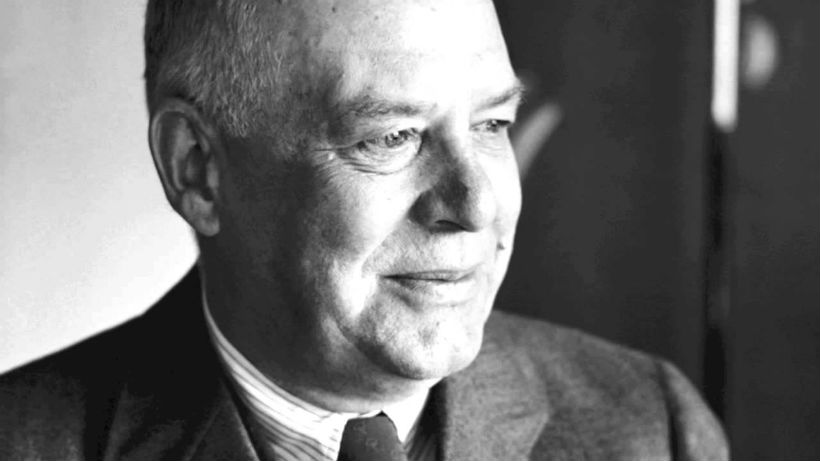
Wallace Stevens (above) was born on this date in 1879.
Read More

Today in History: Sept. 30

The massacre of Kievan Jews at Babi Yar, near Kiev, Ukraine, concluded on this date 75 years ago. When the slaughter was over, 33,771 men, women, and children, civilians all, had been machine-gunned by the Nazi Sonderkommando soldiers in only two days. It set a record for speed combined with bloodthirstiness: other massacres resulted in more dead, but few took so little time to accomplish.

The ravine, a beautiful piece of Ukrainian countryside inside the city of Kiev, was a popular killing spot for the Nazis and collaborators. Later massacres of Soviet prisoners of war, and then of those accused of being communist, and then of the Roma population, followed; historians estimate that as many as 100,000 people were slaughtered on this one piece of otherwise quiet land during World War II.

It was not quiet 75 years ago today. The order had gone out to the Jewish population of Kiev on September 26 that each Jew was to report, with papers, to a specific street corner on September 29 at 8:00 a.m. and that any who failed to show up would be shot and killed on sight. The Jews in Kiev complied because the Holocaust was not yet a rumor (mass slaughters were starting to happen, but not in a seemingly organized fashion) and resettlement away from the war zone was what the Nazi government always promised. The Nazis always came through, just in the worst way possible.
Read More