Today in History: Nov. 10

Sir Henry Morton Stanley, an explorer and journalist, was given the job of covering the Middle East and Africa for the New York Herald, an assignment which included a possible adventure: a Scottish missionary named David Livingstone had launched a search for the source of the Nile River in 1866 and no one had heard from him since. It was 1870.

On this date in 1871, near Lake Tanganyika, after an eight-month journey, the journalist found his story and his man. In his book about the encounter Sir Henry reports that he hailed the missionary with this sentence: “Dr. Livingstone, I presume?” but he destroyed the pages in his diary about the encounter so it is not known if this most famous greeting ever was uttered in real life. Dr. Livingstone made no mention of it in his memoirs, either.
Read More
Today in History: Nov. 9

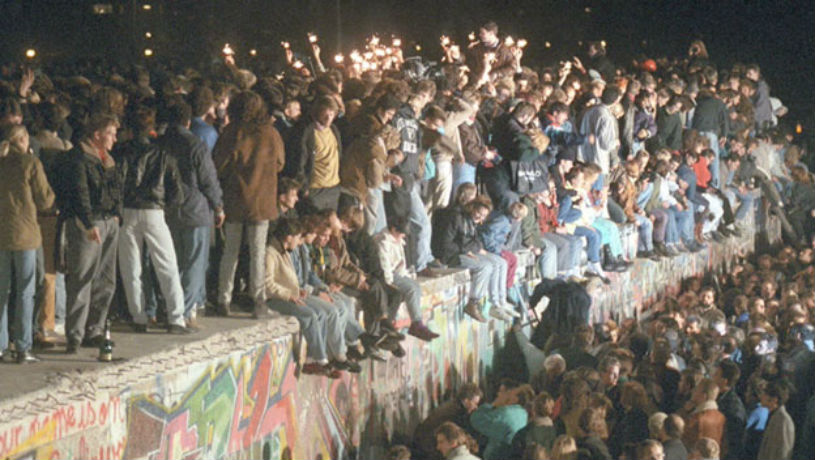
Us versus them. It was served with our breakfast cereal, our school lunches, and the nightly news watched during dinner. The Cold War was a fact, a background noise, a tinnitus-like hum heard 24/7, sometimes from far away and sometimes next door. Its removal seemed to make us aware that it had always been there, how loud it was, and that it had been driving us all insane.

The Cold War’s end could be said to have started on this date in 1989 as citizens of East Berlin started to spontaneously destroy the Berlin Wall (photo at top), a barrier erected in 1961 to divide that beautiful city.
Read More

Today in History: Election Day

In the United States of America, today is Election Day. The next inhabitants of the offices of President and Vice President are to be filled by voters along with one-third of the seats in the United States Senate, the entire population of the House of Representatives, and many local elections (mostly, state legislatures).

Today’s presidential election is the 58th quadrennial presidential election in the nation’s history. The system as it has evolved is neither a truly popular vote nor a truly national one: today’s election is more a collection of entwined local votes that will add up to some statewide and national results. There are so many polling places across the nation that a census is not feasible: some states leave it up to the counties to make polling places available, so one must look for polling station information in those states by contacting county election officials.

If you are registered to vote, with or without a political party, but you do not know where your polling place is, there are many resources. Facebook has offered itself as a polling place locator and ballot information resource, for instance. Here is one other website: Vote411.org.
Read More