Today in History: Dec. 12

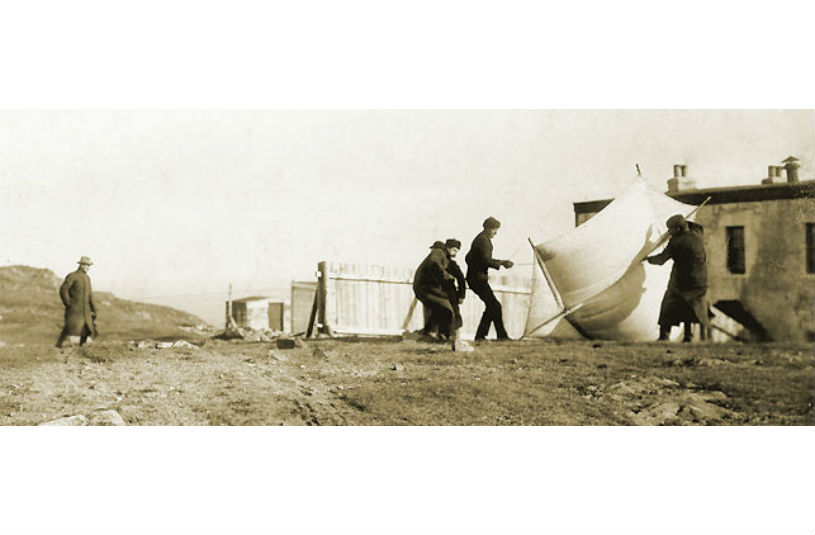
Guglielmo Marconi reported the successful reception of the first transatlantic radio signal on this date in 1901. He had built a station in Cornwall, the far southwest of England, and then traveled to Canada, to a far eastern point in Newfoundland called Signal Hill. (In the photo at top, Marconi is seen on the left directing his associates as they raise a kite with an antenna attached. They are atop Signal Hill.)

The message, three repeated clicks, which is Morse code for the letter S, was sent from the Cornwall transmitter at an appointed time, and, at that appointed time, something—one click or was it three? You heard it, too, right?—something was heard at Signal Hill. At the time of the transmission, the entire route was in sunlight.
Read More

Today in History: Dec. 11

The Mona Lisa (above) was found on this date 103 years ago. The painting, already one of the most famous in the world, had been stolen two years earlier from its spot on a wall in the Musée du Louvre in Paris by an Italian worker, Vincenzo Peruggia, who later claimed that he stole it to return one of Italy’s most famous works to its home country.

The real story was less patriotic than that and more banal: the Mona Lisa was the only painting that Peruggia could fit under his arm, as he was only 5’3″. Further, he did not know that Leonardo da Vinci himself had given the painting to his French patron, the King of France, Francis I, so it belonged in the Louvre and nowhere else. And, of course, he stole it for money: Peruggia tried to sell the painting, and he even called the Mona Lisa his “lottery ticket” in a letter home.
Read More

Today in History: Dec. 10

“After I am dead, the boy will ruin himself in 12 months.”—King George V, referring to his son, Edward

I, Edward the Eighth of Great Britain, Ireland, and the British Dominions beyond the Seas, King, Emperor of India, do hereby declare my irrevocable determination to renounce the throne for myself and for my descendants, and my desire that effect should be given to the instrument of abdication immediately.
 
In token whereof I have hereunto set my hand this tenth day of December, 1936, in the presence of the witnesses whose signatures are subscribed.
—King Edward VIII

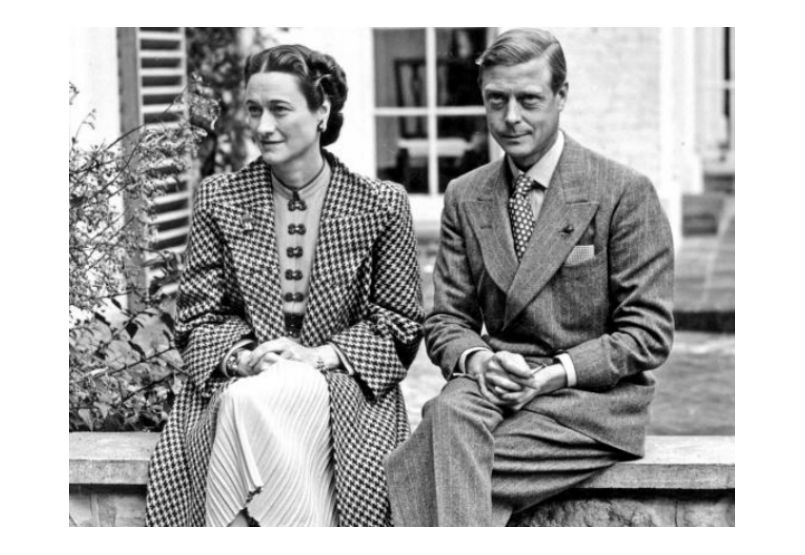
In his worried joke, King George V overestimated the length of his son’s reign by a month. George died on January 20, 1936, Edward became Edward VIII, and then 80 years ago today he signed the formal Instrument of Abdication to end his brief reign.
Read More