January 2 in History

The writer Isaac Asimov, who wrote, edited, and compiled more than 500 books in his lifetime, celebrated January 2, 1920, as his birthdate. He was born near Smolensk, Russia, towards the end of 1919 or very beginning of 1920; the record of his birth was either lost or forgotten when the family emigrated to the US in 1923. He himself celebrated today as his birthday. He died in 1992.

He wrote novels (I, Robot) and many, many semi-encyclopedic works of nonfiction. In public libraries, his titles are found in nine of the ten top-level categories that make up the Dewey Decimal System. The ten categories are: 000–Generalities; 100–Philosophy; 200–Religion; 300–Social Sciences; 400–Languages; 500–Pure Sciences; 600–Applied Sciences & Technology; 700–Arts; 800–Literature. The only category without an Asimov title is (after the jump):
Read More

January 1 in History

Amazing grace! (how sweet the sound)
That sav’d a wretch like me!
I once was lost, but now am found,
Was blind, but now I see.

An Anglican clergyman named John Newton wrote the hymn titled “Faith’s Review and Expectation” late in 1772, and he introduced the hymn in a New Year’s Day service in his parish in Olney, Buckinghamshire, on this date in 1773. The hymn became best known by the two-word exclamation that opens it: “Amazing grace!”

It was not yet attached to any music. Newton and a poet friend named William Cowper collaborated on many hymns for the Olney parish, and in 1779 the two published a collection titled Olney Hymns. (The page with “Amazing Grace” is seen at top.) The book was not a bestseller, but over time it became popular in America during the Second Great Awakening in the 1830s: at least 37 editions were published in America by 1836.
Read More

Today in History: December 31

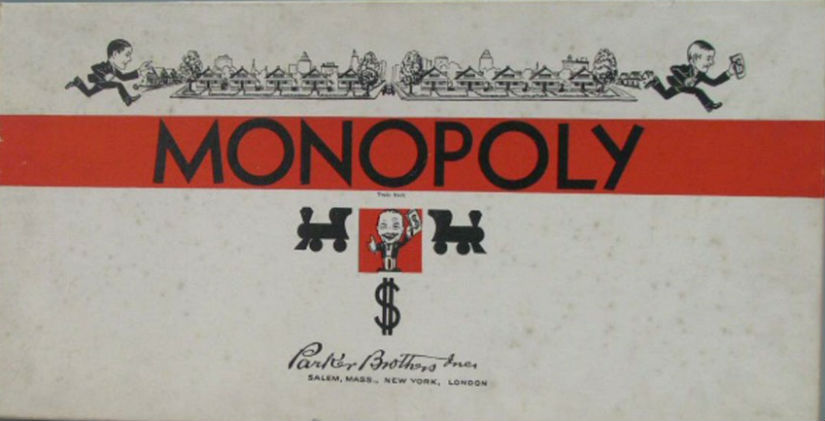
U.S. Patent No. 2,026,082 was granted to Charles Darrow on this date in 1935 for his creation of the board game Monopoly. Parker Brothers, the game manufacturer, was included in the patent. (A 1935 game box is at the top.)

The game was (and is) a variation of a board game called The Landlord’s Game, which had been around for decades by 1935. That game was created by Elizabeth Magie, who earned a patent (number 748,626) for her creation in 1904. Monopoly bears more than a passing resemblance to her creation: The Landlord’s Game included “Chance” cards.
Read More