Today in History: April 7
A B-52 Stratofortress collided with a tanker that was re-fueling it 31,000 feet above the Spanish coast on January 27, 1966. The tanker, which was full of fuel, exploded and its crew was instantly killed. The B-52 broke apart and four of the seven crew managed to parachute to safety. The B-52’s cargo fell onto the coast and into the Mediterranean Sea, however: four hydrogen bombs. Three crunched onto the beach and one splashed down and disappeared beneath the waves.
Fifty years ago today, the hydrogen bomb that landed in the Mediterranean, near Palomares, Spain, was finally retrieved. The three that had hit the ground had each partly detonated, but they did not set off the nuclear explosives inside. A four-mile area was contaminated by the plutonium. All that was known about the fourth bomb was that it too had not detonated, and that it was missing.
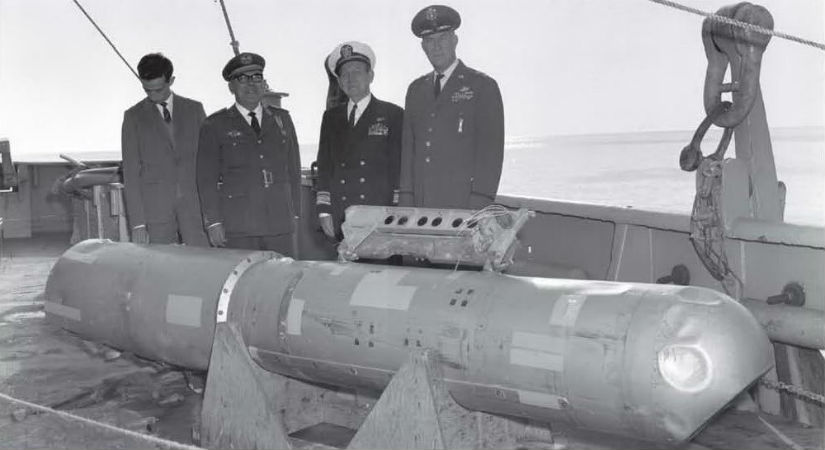
Twenty-nine ships, one aircraft carrier, and several submersibles were used over the subsequent six weeks in the search for the missing bomb. In March, it was located and an attempt was made to pull it to the surface, but it was dropped and lost again. Finally, on April 7, it was retrieved. The Spanish fisherman who saw it splash into the sea filed a claim for salvage rights, which the U.S. Air Force did not honor. At the top is a photo of the bomb after it was found.
Read More

 The Gad About Town