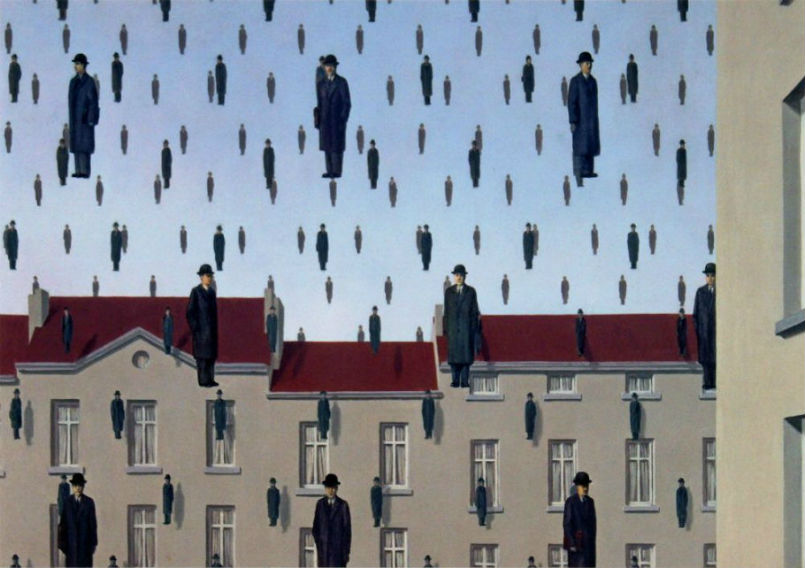
Despair Has No Wings …

To be is to despair and to despair is to remember the thousand tightly missed connections and not-yet completed conversations that will reveal themselves eventually as never really begun. The Surrealists got despair, perhaps better than most. They adopted Existentialism’s finer frustrations and rendered them with comedy, joy, and horror in sometimes strange proportions.

The comedy of coincidence and the tragedy of imminent abandonment dominate their work. Everyone is always alone, and this fact is simultaneously hilarious and horrifying in Surrealist Art.
Read More
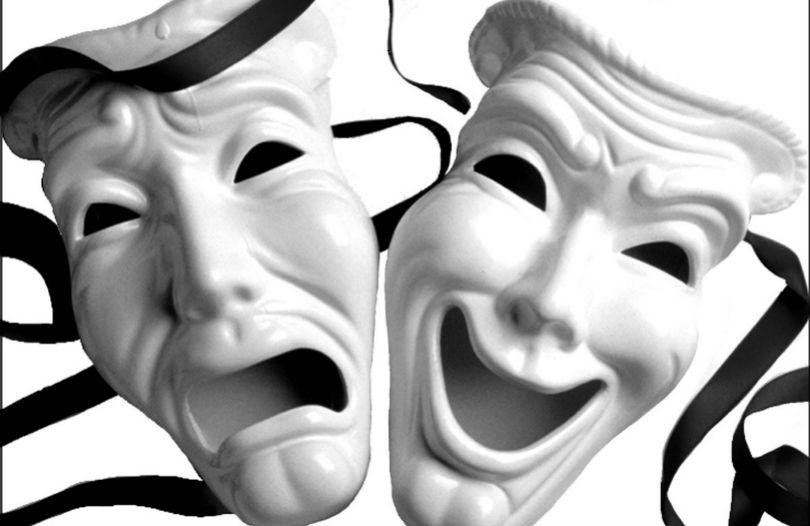
Masked & Anonymous

I am a self-conscious actor, yet I sometimes work at it half-heartedly. Now and again. Half-hearted and hesitant—I blush easily, which makes radio the perfect venue for the experiment (and if you write for that type of character, a blushing, stammering sort, I’m your man).
Read More

Oh! The Places You Won’t Go

Mistakes suck. Errors do, too.

Adverbs will never go hungry for a lack of work in many writers’ drafts, including mine, but that part of speech demands erasure whenever one encounters it. Adverbs are the empty calories of the English language: They are tasty, and they appear to be helpful when we want to bend a verb to do our verbal bidding and guide our eager reader(s) to share our thought-patterns, when context and the verb itself are capable of handling the task just fine on their own. They are potato chips and cotton candy blended into a linguistic smoothie.

All of the personal errors in my history can be described with an adverb, colorfully. Merely an adverb minus a verb or other details, so no personal stuff, no self-incriminating or embarrassing information might be revealed: complacently, awkwardly, abruptly, vigorously, languorously, braggingly, disgustingly, violently, wrongly. Timidly. Brazenly. Very. Many “verys” in there.
Read More