A Generous Dose of Hate

“If you’re black and you haven’t been successful in the last 50 years, it’s your own fault. You’ve had every opportunity, it was given to you. You’ve had the same schools everybody else went to. You had benefits to go to college that white kids didn’t have. You had all the advantages and didn’t take advantage of it. It’s not our fault, certainly.”—Kathy Miller, former coordinator for the Donald Trump campaign in Mahoning County, Ohio, this week. She resigned upon being quoted and called her remarks “inappropriate.” (What aspect of the statement qualified it as “inappropriate,” she left a mystery.)

“Look at what’s happening in the world today. The blacks are getting uppity again. I don’t know why, but it’s scary again.”—a personal acquaintance of mine, explaining why he has started carrying a gun again here in Orange County, New York.

Two decades ago, I worked for a weekly newspaper. Even though it was a small-circulation publication, the fact that we ran a “Letters to the Editor” section meant that we received letters. Lots and lots of letters. Our editorial policy was simple: no profanity or personal abuse.

I, a young assistant editor at the time, did not understand this simple policy, because the letters were often awful, hate-filled documents, even when they were free of profanity and free of personal abuse. My boss, the editor of the newspaper, explained that these individuals wanted their thoughts exposed, after all, and we were helping to expose them. “Let them show the world what it looks like,” was her reply to me concerning one letter’s ugly racism. “It is better when they (racists) are out in the open.” Absent profanity, I was not to edit, “clean up,” or not publish the letters.
Read More
Leap Into Fall

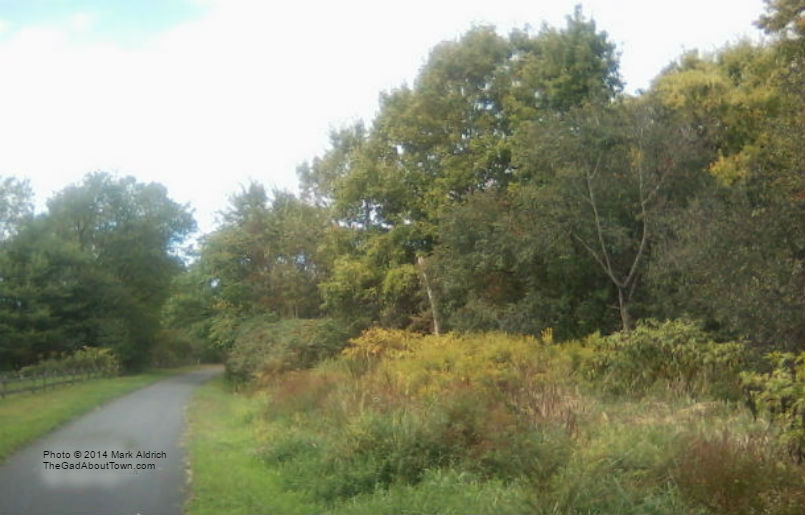
The photo above was taken at around 1:00 p.m. September 21, 2014, in upstate New York, as the leaves were just beginning their annual color change. Starting with a deep green, they shift in color to a weak green, then yellow, then a red that I find beggars my attempts to describe it; it is a red I refer to as “fall foliage red,” because I do not run into it elsewhere.

This of course is a global phenomenon and most human beings do not need my poetical-ish endeavors in description, but we here in the Northeastern United States have fashioned something of a tourist trap out of this simple natural fact of life. “Come See Biology Happen!”

And today, September 22, at 10:21 a.m. autumn struck with warning once again. Today is the autumnal equinox.
Read More

The Stylish Stylist

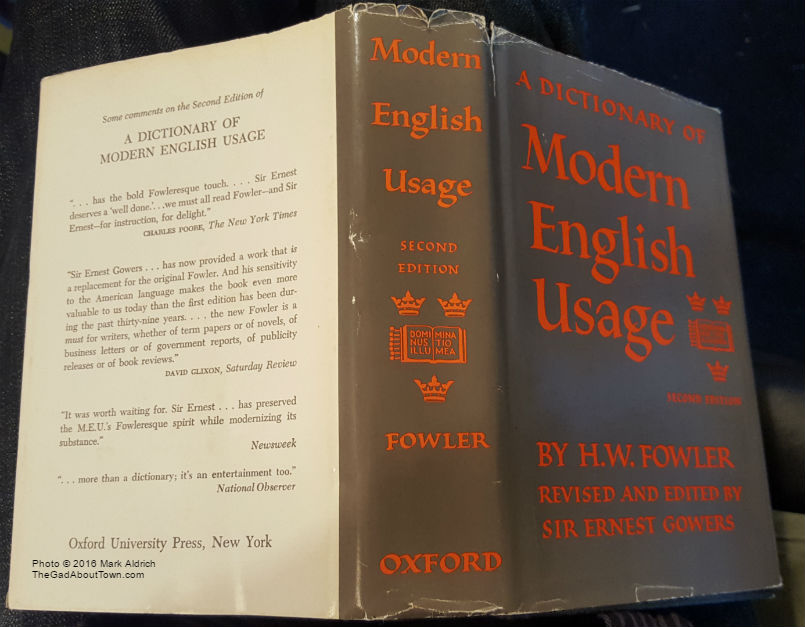
In 1926, Henry Watson Fowler published A Dictionary of Modern English Usage, a book that has remained in print ever since. (The first edition and the second edition use Fowler’s sentences; the third edition, which was published in 1996, is a substantial rewriting of the classic and uses the Fowler name as a form of brand.) Fowler’s book is not a dictionary of definitions, like Johnson’s or Webster’s, it is a usage dictionary, an instructional manual for better using this beautiful tool we have devised called the English language.

Its entries give instructions on pronunciation, offer the pros and cons of employing a variety of idiomatic expressions, and argue again and again for simplicity in expression. Many style guides have followed—the MLA, the AP, the Chicago Manual—and each one is more useful in answering day-to-day questions about one’s writing than Fowler’s guide is, but none is as entertaining as his. His fight was a fight against cliché, obfuscation, and empty rhetoric. He fought for style, for clarity.

He fought against pointless rules. One might think from the description of his work that he is the reason for the commonplace rule against ending a sentence with a preposition. The opposite is true. In a two-page essay on the topic (two pages!), titled, “Preposition at end,” he writes:
Read More