An Offer Like This Will Just Not Come Again

According to NPR, by 1990 the city of Verona, Italy, was receiving over 6,000 letters to Juliet Capulet each year. This fact has been celebrated in a book and movie, both titled “Letters to Juliet,” so the outline of the story is well-known: Lovers who are in the middle of difficult plights or terrible loneliness write letters, detailed letters, about their storm-tossed affairs to Shakespeare’s fictional heroine. Only she, many begin, the ghost of a character who never breathed a human breath, only she can possibly understand and empathize.

Verona has a staff of volunteers who read and sometimes reply to the letters. (“Letters from Juliet” might be a more interesting title.) They call themselves “The Juliet Club,” and it only became an official office around 1990, but people have been writing letters to poor dead (never lived) Juliet for centuries. (Here is the address: Club di Giulietta, via Galilei 3-37133, Verona, ITALY.) Verona enjoys portraying itself as the hometown of Romeo and Juliet and even has a “Romeo and Juliet tour.” (Valentine’s Day is especially important.) Shakespeare certainly did more for Verona’s economy than he did for Denmark’s.
Read More

‘A Renewal’: You’ll Know When You Know

To have love, one must give love; to give love, one must have it to give. That may be life’s deepest catch-22, Hobson’s choice, Morton’s fork—any of those logical situations whose suppositions exist only to support the logic that requires them. Love is illogical, or at least has its own logic; “How Will I Know?” pretty well sums it up. My mother (it is her birthday today) would have replied to Ms. Houston: “You’ll know when you know.”

The moment love is not pursued, there it is; advice to a young lover often follows that logic. “When you stop looking for it or needing it, you will find love.” (It only took about three decades of hearing that for it to sink in for me, which reminds me that it is Valentine’s Day soon.)
Read More

James Joyce and His Birthday

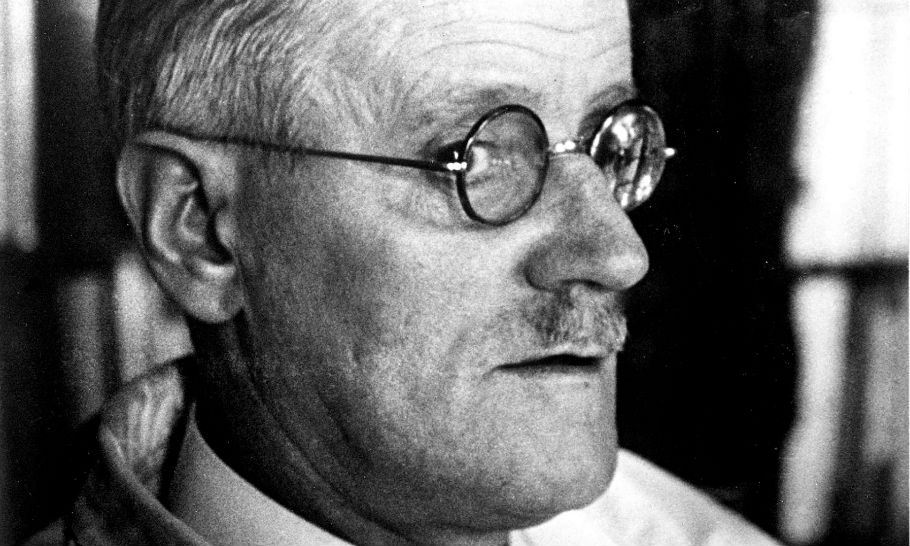
February 2, 2016, is the 134th birthday of James Joyce. In his huge biography, Richard Ellmann notes in several places Joyce’s fascination with his own birthday (he made certain that his novel “Ulysses” was published on his 40th, in 1922) and tells how this affected his relationship with another writer, James Stephens. Ellmann quotes Joyce:

“The combination of his name from that of mine [James] and my hero in A.P.O.T.A.A.A.Y.M. [“A Portrait of the Artist as a Young Man”] is strange enough. [The hero of that novel is Stephen.] I discovered yesterday, through enquiries made in Paris, that he was born in Dublin on the 2 February 1882.” (Ellmann, 592)

Ellmann notes that Joyce also found it amazing that he and Stephens were both fathers of a boy and a girl. Either Stephens did not know or did not want to tell Joyce that they did indeed share a birthday but not a birth date, as Stephens was born February 2, 1880.
Read More