Against ‘Protest Fatigue’

I noticed after we had parted that my friend and I spent our conversation on Monday speaking in hushed tones, that we each ran through our own internal post-election checklist with the other before we proceeded; mine went something like: I know my friend is on my side but I haven’t seen anything on her Facebook feed recently, so when she asks “How are you?” answer her with generalities and let her be specific first.

We hugged hello. “How are you doing?” she asked. I replied with the specifically general (or generally specific), “Today?” and a weak shrug.

She spoke first. “I haven’t talked with you since the election? How are you holding up?” She confessed that she has felt overwhelmed since Inauguration Day. I confessed to the same sensation. “The worst appears to be coming to pass and it looks like they are trying to make it happen faster than anyone seemed prepared for,” I added.
Read More
Irreplaceable Me

I never fooled myself into believing that I was indispensable, but did I have to prove it so often to the world at large?

* * * *
There is a phrase one hears in recovery circles: “Pulling a geographic.” While sharing their stories about the past and the inebriated life, many addicts and alcoholics learn that they have done similar things, like move across the country because they thought that a change would do them good.

One of the things that many of us did, many times, when we were trying to exert control over life was run from it. Move. Sometimes across town and sometimes cross-country. There was nothing so bad it couldn’t be fixed without filling out a change-of-address card.
Read More

I, for One, Welcome Our New Robot Overlords

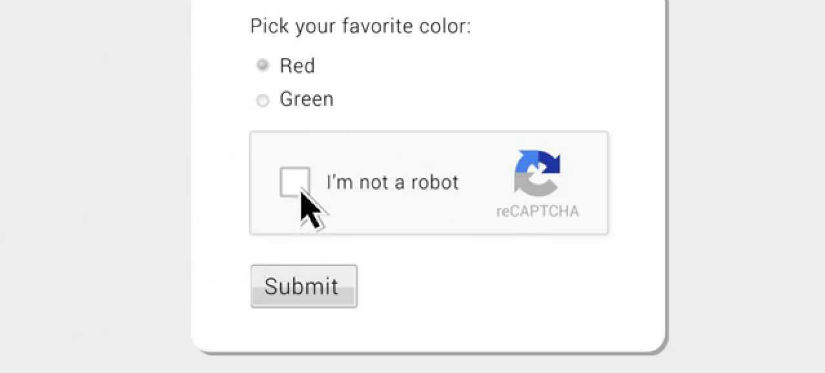
Most if not all of us have seen dialogue box like the one above in our online lives. Sometimes, a real person is called for, even in our heavily automated world. Especially when real money is about to be moved from one virtual hand to another.

About fifteen years ago, some Carnegie Mellon computer scientists developed a method to be employed to differentiate between a human being and a bit of software. They dubbed it, “Completely Automated Public Turing Test To Tell Computers and Humans Apart,” or CAPTCHA. There are several dozen applications commercially available that perform the test.

Some require a user to type in a randomly generated word or number sequence that the app has displayed just for them. Some require a bit less, a simple mouse click inside a box that sits next to a (sometimes) charmingly worded version of the question, “Are you a robot?”
Read More