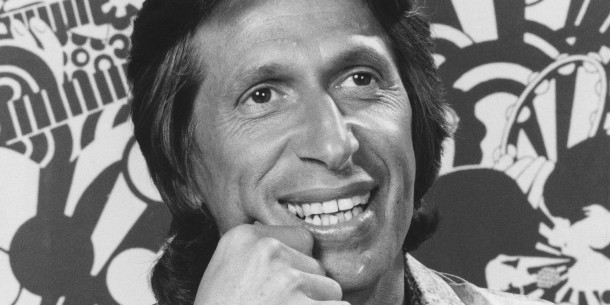
A Thought on David Brenner
For a ten-year-old who was starting to notice two things: 1. the grown-up world had a lot of gaps in its “logic” and 2. laughter felt better than confusion, David Brenner and his droll commonsense stand-up act turned out to be a revelation. He was one of the first stand-ups I unofficially studied; I remember listening to his albums over and over, searching for the moment, the word, that would make the recorded audience laugh. That makes me pretty sure he resides in my perspective on the world. As Johnny Carson introduces him in the clip below, it was a “somewhat warped” perspective.
The news that David Brenner died today at age 78 reminded me that I had not thought about Mr. Brenner for a long time, much like most things I liked when I was 10. A love for the New York Yankees, strawberries, and comedy in general are about the only things I have in common with my ten-year-old self.
In my teen years I ignored or even rejected anything I had liked when younger, and of course, like every teenager worth the term, I also rejected anything my parents liked. So, with prejudices like these, David Brenner stood no chance in my world. He was not “edgy,” not “interesting,” not a lot of things. He was not absurd like Steve Martin and not dry like Steven Wright and not inflamed like Sam Kinison or angry like Bill Hicks. He was in my comedy DNA, but he was one of my mom’s favorite stand-ups, so he was old.
But I also liked, even loved, “old” comedians. The old vaudevillians, all of them, I adore. When YouTube started to become popular, one of the first things I looked up was Ed Sullivan clips—I wanted to see if my recollection of certain comics was right or not. I like to think I was the first person to enter “Myron Cohen” as a search term on YouTube. My parent’s generation of performers? Not old enough, I guess.
One of the first Tweets I saw today about Brenner’s death asked, “Why is it so hard to believe he was 78?” Almost every photo of him in his obituaries today is from the 1970s, with a helmet of hair and Johnny Carson nearby. He remains ever 40. Even though he was still a working stand-up at his death, he was not a television presence and had not been one for almost 20 years, when he briefly had a show on MSNBC. (Who hasn’t “briefly” had a show on MSNBC by now?) He had a couple hit books in the ’90s, but so did every comic.
Something did not happen for David Brenner that happened for a lot of comics when the next generation came along: They did not bring him on their shows very often. When Johnny moved on and Jay and Dave took up permanent residence at 11:35 p.m. and yet more talk shows proliferated, Brenner was an only occasional presence, even with the larger number of late-night stand-up slots available. Brenner was dubbed “the father of observational humor,” but only after “observational humor” became a term, after Jerry Seinfeld and Paul Reiser and others were making millions talking about how interesting it could be to find mundane the things that … actually were mundane.
Among Brenner’s generation, George Carlin started out doing fairly conventional characters before he became an unconventional character himself, one who noticed absolutely everything and filtered it through a jazz poet’s brain. Robert Klein was the cool history professor. Bill Cosby told shaggy-dog stories that made the familiar comfortable. Richard Pryor was a force of nature—the reason “Pryoresque” is not a term is because he was uniquely himself and made the unfamiliar uncomfortable. None were “observational comics,” none were professional noticers of the lack of logic in our everyday lives like David Brenner. He was one of the first.
Brenner did not yield details about his current life, but he reminisced about growing up in West Philadelphia with a novelist’s eye for detail; he did not do impressions, but he easily tossed out one-liners from cabbies he encountered and the like (they all sounded like him). He did not bring audiences into a tortured psyche like Richard Lewis; he was ever cheerful, and ever 1970s. When Johnny Carson started making his schedule easier and bringing in “guest hosts,” Brenner filled in 75 times, but all in the late ’70s and early ’80s. By the time Carson was retiring, the battle to replace him was between Letterman and Jay Leno and there were no other names.
David Brenner never found himself on the outside looking in and was thus never the subject of a “where are they now”-style re-discovery, but he also never got bigger than he was in the 1970s, when he appeared on almost every talk and game show and in every nightclub and medium size theater. For a time, he seemed as ubiquitous as a public utility, and then, for showrooms on the Vegas strip, he was a public utility: cheerfully reliable and pleasantly maintenance-free.
There are worse things to be said about a career. So even though I did not think often in recent years about the late David Brenner, I was aware he was still out there, still making people laugh. I have come to respect the people who are public utilities in our lives, and I only wish I had randomly written this appreciation yesterday instead of today, before an occasion brought it.
* * * *
The story that Steve Martin tells in “Born Standing Up,” his “autobio”: “I called the comedian David Brenner for advice. David was successfully guest-hosting The Tonight Show and filling theaters and clubs. Our paths had crossed, and we had exchanged phone numbers. I explained that I was getting jobs, but the travel costs were killing me. If I got five hundred dollars for an appearance, it would cost me three hundred just to get to it. He told me the deal he always proposed to club owners. He would take the door, and they would take the bar. He said he would hire someone to stand at the entrance with a mechanical counter to make sure he wasn’t being cheated.”—”Born Standing Up,” 146-7.

 The Gad About Town