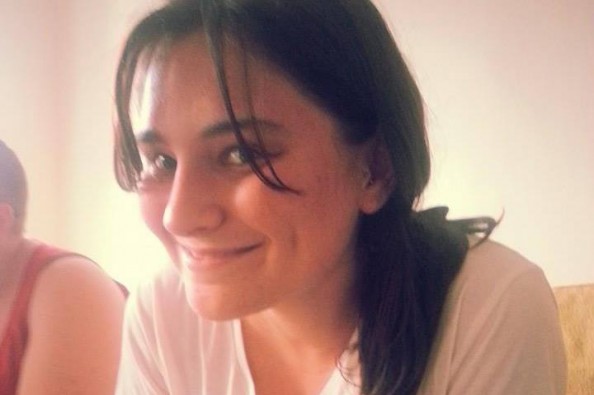
Grade School Avant Garde

Art that is odd for the sake of the odd is often neither. Sometimes it is both. Meet the Lettrists.

Greil Marcus, in his essential history book, “Lipstick Traces,” describes a particular type of artist:

There is a figure who appears in this book again and again. His instincts are basically cruel; his manner is intransigent. He trades in hysteria but is immune to it. He is beyond temptation, because despite his utopian rhetoric satisfaction is the last thing on his mind. He is unutterably seductive, yet he trails bitter comrades behind him like Hansel his breadcrumbs … He is a moralist and a rationalist, but he presents himself as a sociopath … No matter how violent his mark on history, he is doomed to obscurity, which he cultivates as a sign of profundity.

Marcus’ book places the punk rock movement of the late ’70s in a “secret history” of western culture beginning in the 17th Century but he finds his greatest excitement in recounting the stories of the Dadaists, the Lettrists, and the Situationist International.

Often, it is the same story, though: Revolutionary thinker(s) who create art via revolutionary thought that (sometimes angrily or destructively) confronts the norms of the era are largely ignored by the culture at large except by a few who incorporate the new art in more popular forms. Something that was created with great energy, occupied 100% of its creator’s brain, becomes a tiny part, sometimes less than 1%, of a larger movement and a footnote in history.

The Lettrists are an example. Some of them are still going, 70 years after Isidore Isou came up with the idea. What was the idea? That the alphabet is a random bit of socially acceptable ordering of language, yet we make many more sounds than are indicated by our 26 letters. Sneezes should have a place in an alphabet, because, well, they communicate.

Here is Orson Welles interviewing Maurice Lemaître and Isou, who is the poet in the center who can not seem to stop grinning:

The dedication to the fantasy of a new language is powerful to witness, but I am not a fan of other people’s fantasies. There is little different between Tolkien and Isou in that they both invented unique alphabets; for me, Isou’s attempts at expanding our way of describing life here on earth is more interesting. But interesting is all that it is. It is seductive in its lack of seductiveness.

Give me Lettrism over “Lord of the Rings” and give me the Sex Pistols over either.

Further, the so-called “flash mobs” that have been invading retail spaces over the last decade or so are the offspring of the Situationists of the late 1960s, except the Situationists wrote long manifestos and conducted public debates about things like the idea of society, and flash mob participants consider the fact of a group making a group statement to be the statement, period. And now flash mobs are a part of any media campaign’s advertising budget.

Yes, I am a cranky “get off my lawn” old man in my punk tastes. This is because I am a cranky old man, deep down, deeper than any punk can reach. (Or this makes me very punk, but no one can declare themselves that.) In the late ’70s one of my schoolmates was an import from London named Dan, and he already had terrible teeth (we were 10 or 11), a gaudy accent, and wore torn t-shirts and played music whose major point was its loudness. (Or so it seemed to my ears.) I wish I could write that in 1978-’79 I was friends with a London kid who introduced me to the Sex Pistols and The Clash, but I can not. I detested the noise. I was also introduced to rap music around then or even earlier: another elementary school classmate was rapping like Gil Scott-Heron in 1976, but we were 8 and what little rap that I remember was about his birthday party.

In the 1990s, I fell in love with what was by then ancient punk rock and started to absorb it; around this same time Johnny Rotten/John Lydon started to become a beloved cultural figure in Great Britain, which he remains.

The energy of anger, the cultural energy of anger, the dedication to anarchy (which brooks no dedication), rarely appealed to me and more frequently scared me. Any anarchists in my circle brought out my inner parent, which is probably why I hated them all the more. (Hate? Wait a second. I do not hate …)

The violence of change indicates a world of absolutes, of either-ors; a world that includes shades of gray and a third way presents yet another either-or, however: Either we live in a universe of absolutes or we do not. The revolutionaries live in the hyphen between the either and the or and like the hyphen, life there is brief. Every culture has an avant garde, and every culture defeats it by ignoring and then absorbing it.

* * * *
Image at the top found at: Ideological Art.

____________________________________________
The WordPress Daily Prompt for October 15 asks, “From your musical tastes to your political views, were you ever way ahead of the rest of us, adopting the new and the emerging before everyone else?”

* * * *
Please subscribe to The Gad About Town on Facebook: http://www.facebook.com/thegadabouttown
An Attack of the Cleans

It is said that Albert Einstein once asked, “If a cluttered desk is a sign of a cluttered mind, what are we to think of an empty desk?” While not famous for his quips (although E=mc2 is the soul of wit in its brevity), Einstein’s joke came from his one man show, “The Theories of My Relatives.”

His mother was always complaining about his messy desktop and resented that opening the desk drawers was verbotten.

* * * *
The human mind is an organizer, the greatest one in existence, the one that all of our tools and machines are built for in an attempt to replicate its principles and imagined actions. Nature does not organize. Every organizing structure we come up with is an imposition on nature and is thus radically random: no method of organizing is more “correct” than any other.

Alphabetical order? Which alphabet? Which word should be used to alphabetize? “The?”

Chronological? Write your next book from the outside in.

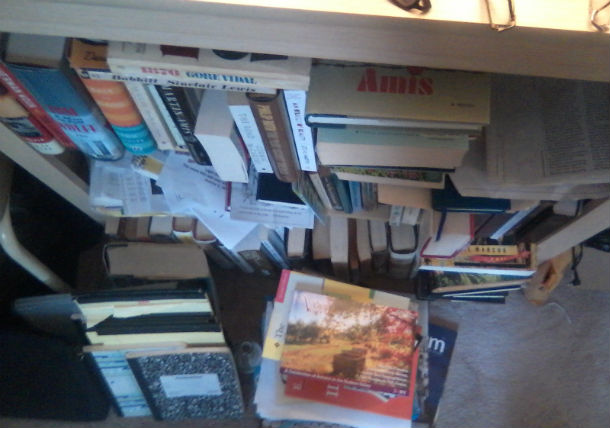
Size? I partly organize my bookshelf by the size of books (see above), the heavier ones on the bottom or on the floor (thus, not even on the bookshelf) because the shelf needs reinforcing.

Or one could organize an argument by number of words used in each section, largest first. Juries would return verdicts of “confused.”

(My girlfriend’s cat has one organizing principle and the work of perfecting her world with it occupies much of her day, for many of her few waking hours: This thing on the space that I want to occupy until I move it off this space, when I will move somewhere else, must go. And she sweeps the offending pen or paper or book off the desk.)

The human mind finds and makes connections between things and ideas, or the representations of ideas: words, papers, books. In an ideal sense, all ideas are equal. The work of organizing, re-cluttering, and finding new connections is a creative act. Dear Albert Einstein’s mom: A cluttered work space is the same as an organized work space, it’s just that only one of them meets your random aesthetic standards of ideal desk appearance.

* * * *
I have lived with hyper-organized spaces that I created for myself: Books separated by subject and then alphabetized (left to right, by author last name) within those. Multiple titles by the same author arranged chronologically by publication date.

(A famous writer’s wife once tried to start a fight with me over how our bookstore organized its books: Alphabetically, but in two different ways, neither of which suited her particular preference for her husband’s name to be prominent everywhere at all times for reasons of income. The majority of the store was alphabetical by author within its various sections, but the privileged section of new hardcovers, nearest the door, well, the books on those shelves were alphabetical by title. Thus, his newest title was on a lower shelf because it did not begin with A, and his paperbacks, with his last name starting with S, were not always at eye height. After she and I stared at each other for a moment, the famous writer paid for his purchases and placed his arm around his wife’s shoulder and they started out the door. But at the door he turned, looked at me over his wife’s head and said, “You’ll have to excuse my wife. She’s rather eccentric.”)

Virtual file folders inside virtual file folders in my computer. A clean computer desktop, with just the “C:” icon and the trash bin and maybe the couple of virtual folders that contained whatever I was working on at that moment.

(I had an officemate who photographed his desktop and made that image his computer screen desktop image, so when you were talking with him at his desk you were looking at a real-life version of Pink Floyd’s “Ummagumma” album cover. Desktop > desktop > desktop. He would regularly update the photo to reflect current changes on his 3D “real” desktop like the content of his IN/OUT box or his children’s school pictures.)

ummagumma

I haven’t listened to Ummagumma in quite a while.

In the past, I have organized my kitchen to discover how inefficient that could make me. I alphabetized the spices. I have arranged the clothes in my closet by color. My baseball card collections (many complete sets) were always divided into American and then National leagues, and then broken into teams, my favorites first, favorite players on each team towards the front.

Perhaps you have noticed that, in the past, I was kind of a rigid idiot.

Finally it occurred to me that the best, most efficient, kitchen organizing principle was “frequency of use near the areas of frequent use.” And that principle, which is a barely controlled entropy, is what guides most of my organization now.

* * * *
Roland Barthes: “My body is free of its (self image) only when it establishes its work space. This space is the same everywhere, patiently adapted to the pleasure of painting, writing, sorting.”

Where am I me? When am I me? When I am not engaged in the illusion of self that I studiously maintain; the image of myself that I carry around in my brain is not me, as it is a fiction. When I am not my image, I am myself. Often, I find myself in the field around me, the space that gives evidence that I occupy it, my work space. My desk. I am found in the outline of things that I use, the adumbration of my stuff: papers, books, pens, glasses. Words. Inside is a space perfectly fitted to me, or to my image of myself. And then, by thinking that thought, it is gone again.

____________________________________________
The WordPress Daily Prompt for October 14 asks, “What’s messier right now—your bedroom or your computer’s desktop (or your favorite device’s home screen)? Tell us how and why it got to that state.”

* * * *
Please subscribe to The Gad About Town on Facebook: http://www.facebook.com/thegadabouttown
In Support of a Good Friend

Perhaps the best thing one can feel about one’s friends is the desire to tell everyone you meet, “You ought to know so-and-so,” or “I hope you can meet …,” about them. Even better than that, I suppose, is telling your friends that you think of them in this way. I am grateful that this is a familiar feeling in my life.

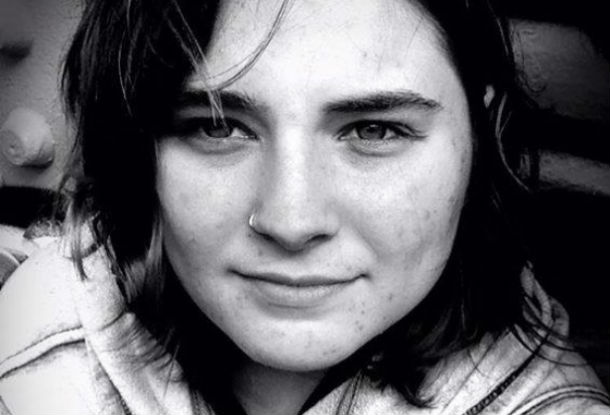
I would like all of you to meet my good friend Kat. She is one of the more remarkable people I have met: 20 years old but with many more years than that in life experience, honest up to the point just before it becomes “honest to a fault,” curious, and funny. A good beginning songwriter and keyboard player. She has many ambitions, and one is to study in England; because no one would have given her a chance to attend college at all but she is a student at The New School through her own initiative and work anyway, I think that she will be attending school in England. She needs help with this, however.

She is pursuing her own fundraising this month at this site: Help Kat Study Abroad.

Kat has some details for us:

Attending college was a huge first step into making a better life for myself than the one I had come from. After spending some time in foster care as a kid and constantly feeling the need to fight to be heard, I am adamant about helping others find and share their voice.

Being in college has helped me to start on this journey, but I feel it is important to take my goals a step further. My goal is to study abroad at the University of Sussex next semester, and I need your help!

The University of Sussex is located in Brighton, which is known for its effective role in a variety of social movements. Attending the University of Sussex would develop yet provide opportunities to learn through real life experiences. Some examples of opportunities I plan on getting involved in include an organization called Mind Out, which is a mental health service targeted towards LGBTQ people. As someone who is a member of the LGBTQ community, I feel it needs to be incorporated in my activism.

What follows is an autobiographical essay that Kat wrote earlier this year. It is reprinted with permission.

In My Skin” by Kat McCauley
Nothing felt real. The words that were coming out of my mouth were not my own. I was watching life around me happen, and had no say in the outcome of any of it. If anything was felt, it was discomfort, but even that felt far away. Everything felt far. I was floating further and further away from what was supposed to be my body. It was like going in and out of consciousness. I was told my mind was playing tricks on me. I wanted so badly to feel, but there was nothing gradual about who I was at the time, and any feeling that became present overcame me like a tornado. Before I knew it I was unmanageable and going down a long dark hill at a rapid pace. I was fourteen years old, and had never felt more alone. I was so good at pretending to be social, that no one knew how truly antisocial I had become. I was a chameleon, and could pick up on anyone’s personality. I could be anybody’s best friend. But nobody knew me.

I had been struggling with severe depression and feelings of dissociation for a few years, and had tried to keep it together.

Having just gotten out of foster care, I was learning quickly that suppressing my feelings was not going to work for me anymore. I had tried so hard for so long to be the perfect image. I wanted to control how people saw me, but eventually the truth caught up with me, and I had to learn to feel things as they were happening. It was a huge challenge, for I had never, until being in foster care, had the chance to experience my feelings in a safe environment. Feeling was something I viewed as dangerous and weak. I wanted to persevere. I wanted to be the one who did it all alone. Feelings became completely overwhelming and unintelligible for me. I had spent so long suppressing them, that if a feeling came up, I would go numb. The number I was, the further away I felt from myself.

It was at fourteen years old that I realized I could no longer persevere alone. I showed up to school one morning, something I hadn’t been doing very often, and ended up being sent away to a mental hospital by a guidance counselor who had become aware of how much I had been struggling. Terrified, I was forced back into my own skin, a place unfamiliar and lonely. While this was not the last time I would be sent away, being in the hospital taught me a lot about true bravery and strength. While being away in a safe space I began to face some of the demons that had brought me there in the first place. It gave me breathing room to begin to process some of the trauma I had faced growing up. It gave me the chance to learn how to take care of myself.

I can now see that strength comes in many forms. For me today, strength and courage come in the form allowing myself to be raw and to be seen. This is where the growth happens. This is where I can begin to heal. Through the love of the people who see me, I have been able to reclaim the love I’ve always wanted to have for myself. For a long time, my biggest hope was to want to want to feel safe. I realize now that I wanted to be okay the entire time; I just didn’t think it was possible. I didn’t think that someone like me, someone who came from dysfunction, someone who didn’t even feel connected to a body, could ever even consider the possibility of being safe. Today, I know it is possible to be safe in my skin. I am able to love and be loved in an authentic way. I am able to feel and to process the experiences of everyday life. I am able to live comfortably in my skin. Always Remember: YOU are LOVED. You are important! Most urgent of all, YOU ARE WORTH BEING SEEN.

I did not know Kat in that difficult period of her life, but all the work she has put into pursuing her truth over these years has given my friends and me one of the most authentic human beings we have been lucky enough to know. You ought to know her. I hope you get to meet her. I hope you can help her.