No Mystery

We are speaking of the summer of 1976, when I was a seven-year-old hidden from myself, a summer I remember for being the Bicentennial, for being sunny every single day, and for the work of Leslie McFarlane, who around that time had published a book revealing he was the author of my favorite books. That book landed with a thud that did not reverberate into my world: as far as I was concerned, “Franklin W. Dixon” and not Leslie McFarlane was my favorite writer, and The Hardy Boys were the older brothers I did not have.

Books 1 through 22 of The Hardy Boys series were written between 1927 and 1947 by a Canadian writer who was desperate for income, Leslie McFarlane, and even though Grosset & Dunlap only paid him $85 per book with no royalties, he discovered that this was $85 per book that he could count on as long as he kept typing. He wrote the first eight in just over two years, just as the Great Depression was consuming all it could.
Read More

Make a Wish, Already

The Wikipedia disambiguation page for the commonplace partial phrase “rule of three” lists nine items. Actually it lists 10, the tenth not being an example of the concept of the rule of three in day-to-day life but the title of a play; it may have been added by an editor simply to amuse himself or herself. (It was not me.)

It would be a perfect example of the rule of three to have three sets of three things make up the possible definitions of the phrase; it is comic to have 10 instead. So, why three wishes? Why do we knock on wood three times for good luck? (Does anyone knock for bad luck? There are a lot of people on our planet and even more have existed and departed; someone must have.)
Read More

Waiting for MacGuffin

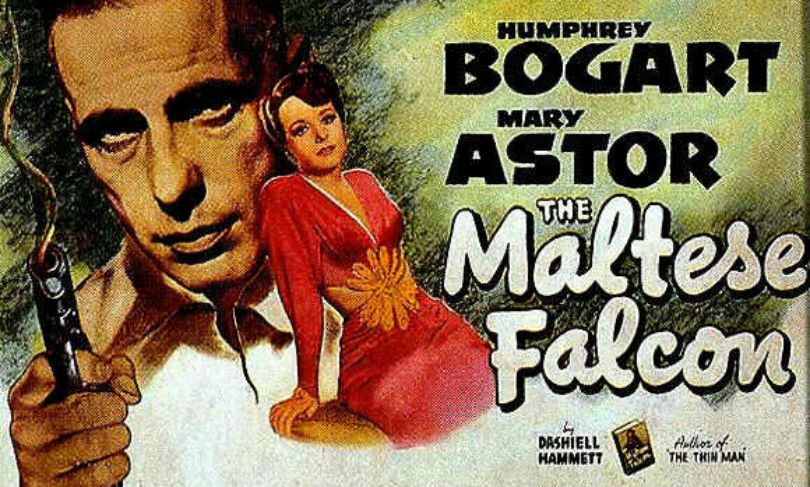
Alfred Hitchcock is credited with coining the term “MacGuffin,” but not the thing itself, which has been around since people started telling stories to each other. In spy movies and thrillers, a MacGuffin is the object that sets the plot of the movie in motion; it’s usually a something people desire that the hero and his nemeses pursue, and that pursuit provides the film’s plot. The specific nature and form of the MacGuffin is usually unimportant to the overall plot. In plot terms, but not theological ones, the apple in Genesis is a MacGuffin.

Neither of the two most famous examples of a MacGuffin in film history appear in a Hitchcock film however, even though he used the device quite frequently in his many movies (he directed more than 50 films from the 1920s through the ’70s).
Read More