The Ghostly Writer

The French writer Guy de Maupassant was famous for approximately two things: one, his brief yet incredibly prolific writing career; and two, his claim that one of his many stories just happened to have been dictated to him by his ghost-double, his doppelganger.

M. de Maupassant was dying of syphilis for the last several years of his life (perhaps we have three things he was famous for), and insanity is one symptom of that terrible disease. In “The Horla,” which he published in 1887, a few years before his death, the narrator is tormented by a demon he can not see, can not prove exists, but who comes to him every night and drinks the water off his night table and makes him ransack his own house, to the consternation of his servants. (I might write a parody of this and call it, “The Santa.”)
Read More

Today in History: Philip Larkin

Philip Larkin, born on this date in 1922, was a librarian at the University of Hull in the north of England. He was also a major poet; thirty years after his death, he is consistently ranked among the top ten post-war English writers. Born in Coventry, he studied at Oxford University and became best friends with Kingsley Amis; he contributed to and helped edit Amis’ first novel, Lucky Jim, which launched Amis on his own legendary career in literature.

He accepted the position at Hull, far away from the London literary scene, in 1955 and he never left. He rarely saw London or Oxford, even more rarely spent time abroad, never set foot in Canada or America. In 1964, a television program profiled Larkin, who by then had published two novels and three volumes of poetry and was being ranked among the best writers of his generation. Asked about his affiliation with Hull, he replied, “I never thought about Hull until I was here. Having got here, it suits me in many ways. It is a little on the edge of things, I think even its natives would say that. I rather like being on the edge of things. One doesn’t really go anywhere by design, you know, you put in for jobs and move about, you know, I’ve lived in other places.”
Read More

‘In Praise of Limestone’

[…] In so far as we have to look forward
To death as a fact, no doubt we are right: But if
Sins can be forgiven, if bodies rise from the dead,
These modifications of matter into
Innocent athletes and gesticulating fountains,
Made solely for pleasure, make a further point:
The blessed will not care what angle they are regarded from,
Having nothing to hide.
Either, but when I try to imagine a faultless love
Or the life to come, what I hear is the murmur
Of underground streams, what I see is a limestone landscape.
—W. H. Auden, “In Praise of Limestone”

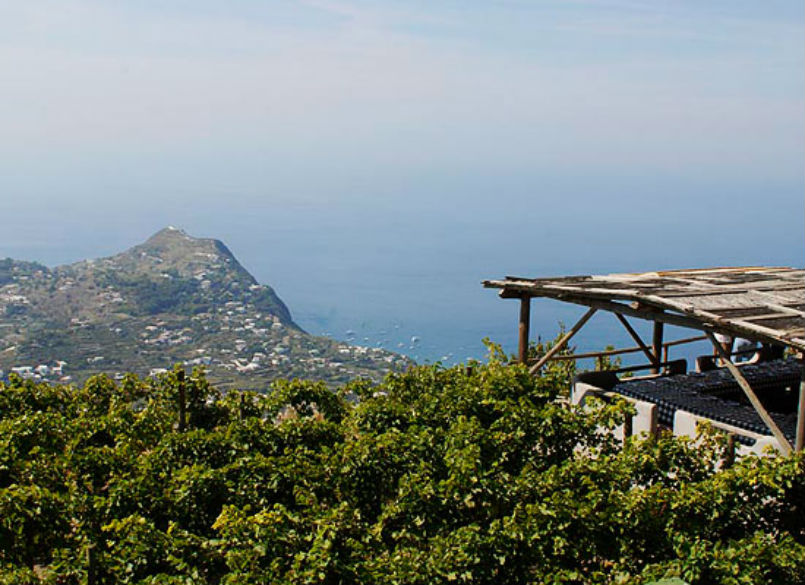
In his 66 years, W.H. Auden lived in many locations in Europe and America: he was born and raised in York, educated at Oxford, and lived long-term in Berlin, New York City, Michigan, Italy, Austria. In 1948, he started spending his summers on the island of Ischia, in the Tyrrhenian Sea. (Seen above.) That island’s landscape, covered as it is with rocky volcanic outcroppings, so different from any he had known, came to represent difference itself in his mind.
Read More