‘Higgling, Haggling …’

The title is a part of Adam Smith‘s description of the flaws inherent in any system of bartering: Once two parties have actually agreed to negotiate a swap of items or services, which is easier described than accomplished, how long will it take to negotiate value or price? Is my horse worth the same as your horse? Why do you think so? You must be hiding some detail. You must be trying to foist a sickly ill nag on me to ride off with my healthy animal. How dare you …

If one party thinks the other is out to cheat him—even if the other party is not out to cheat—he will over sell with the intent to make a profit. Further, if the other party also thinks he is about to be cheated, both parties will attempt to cheat each other in order to think they are protecting themselves. Hence Smith’s description of barter as “higgling, haggling, swapping, dickering.” The two bartering parties run the risk of spending the entire day in fickle negotiation rather than in work.
Read More
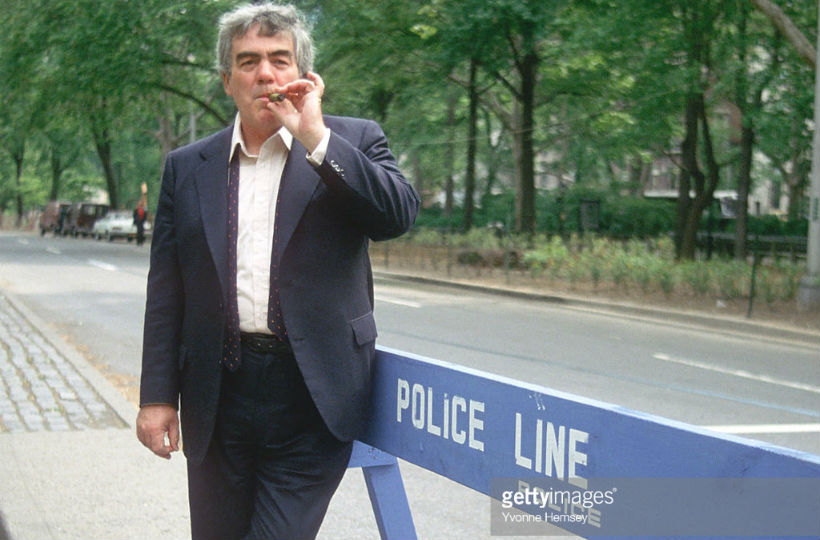
Jimmy Breslin Is Not Finished

About a dozen years ago, his columns began to be the sort of column that one’s editors classify as “occasional,” the sort written on the death of an acquaintance or because the writer needs to release a memory so it can release him.

In November 2004, he quit abruptly, quit writing his regular column, quit in the headline, which read in full: “I’m Right—Again. So I Quit. Beautiful.” Jimmy Breslin’s final column for New York Newsday on November 2, 2004, predicted a John Kerry victory in the U.S. Presidential election that day and closed with the image of him going to bed early so he can “rise in the darkness and pursue immediately an exciting, overdue project.” Thus, since he considered himself to be otherwise occupied, he was through with writing a column and he ended with, “Thanks for the use of the hall.”

He was 74. He had earned the right. Almost six decades in the newspaper business? He wrote for almost every newspaper and helped start New York magazine. He won the 1986 Pulitzer Prize for Commentary. He had earned to right to quit with the newspaper running banner headlines, a week-long countdown to his final goodbye column, and a special section devoted to his work, but he chose to simply announce in a column that there would not be another one, that the space was now available for someone else.

On Sunday, The Daily Beast published the first new work from Jimmy Breslin in more than a decade, a 2500-word work of what is being called “autobiographical fiction” entitled “Trumpet Lessons, Life Lessons.” The online magazine has been re-publishing classic Breslin columns for the last several years; John Avlon, the editor-in-chief, is a Breslin fan.
Read More

Deus X-Files

Deus ex post facto: plot twists and other dilemmas …

* * * *
In classical drama, the term deus ex machina refers to a plot device wherein a plot problem is suddenly solved by the arrival of a previously unannounced character who supplies the answer or solution. “But don’t you know? That’s your brother!” would be a line delivered by a deus ex machina character, thus helping our hero avert or defeat a troublesome situation.

When a playwright or a novelist needs to fix an intractable plot puzzle, he or she might resort to the tool, which is Latin for “god from the machine,” or “you couldn’t figure it out for yourself with the characters you’d created, so you punted,” but audiences since ancient times have tended to see through the fix. “Where did HE come from?” More often than not nowadays, it is used ironically, but when you find yourself reading a book and seeing lines delivered by a character that you do not remember being introduced to, your inattentive reading is not to blame. That character really was not there 20 pages earlier.
Read More