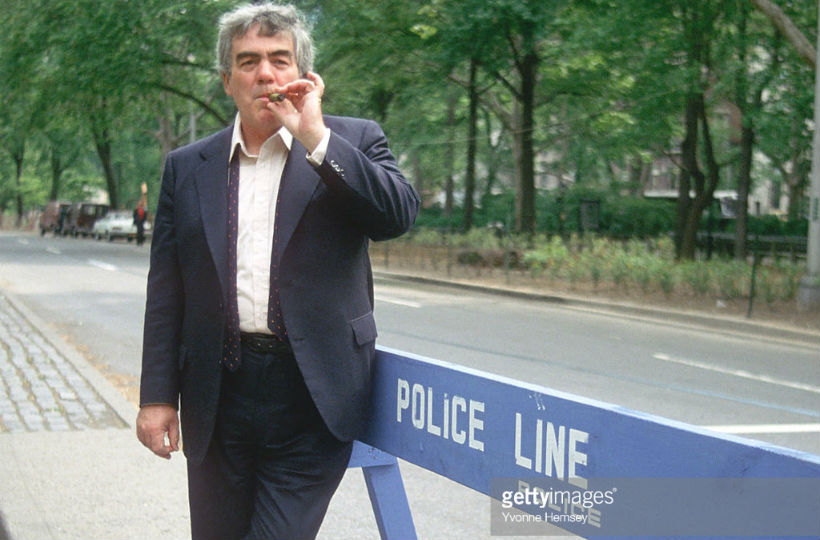
Jimmy Breslin Is Not Finished
About a dozen years ago, his columns began to be the sort of column that one’s editors classify as “occasional,” the sort written on the death of an acquaintance or because the writer needs to release a memory so it can release him.
In November 2004, he quit abruptly, quit writing his regular column, quit in the headline, which read in full: “I’m Right—Again. So I Quit. Beautiful.” Jimmy Breslin’s final column for New York Newsday on November 2, 2004, predicted a John Kerry victory in the U.S. Presidential election that day and closed with the image of him going to bed early so he can “rise in the darkness and pursue immediately an exciting, overdue project.” Thus, since he considered himself to be otherwise occupied, he was through with writing a column and he ended with, “Thanks for the use of the hall.”
He was 74. He had earned the right. Almost six decades in the newspaper business? He wrote for almost every newspaper and helped start New York magazine. He won the 1986 Pulitzer Prize for Commentary. He had earned to right to quit with the newspaper running banner headlines, a week-long countdown to his final goodbye column, and a special section devoted to his work, but he chose to simply announce in a column that there would not be another one, that the space was now available for someone else.
On Sunday, The Daily Beast published the first new work from Jimmy Breslin in more than a decade, a 2500-word work of what is being called “autobiographical fiction” entitled “Trumpet Lessons, Life Lessons.” The online magazine has been re-publishing classic Breslin columns for the last several years; John Avlon, the editor-in-chief, is a Breslin fan.
Read More

 The Gad About Town