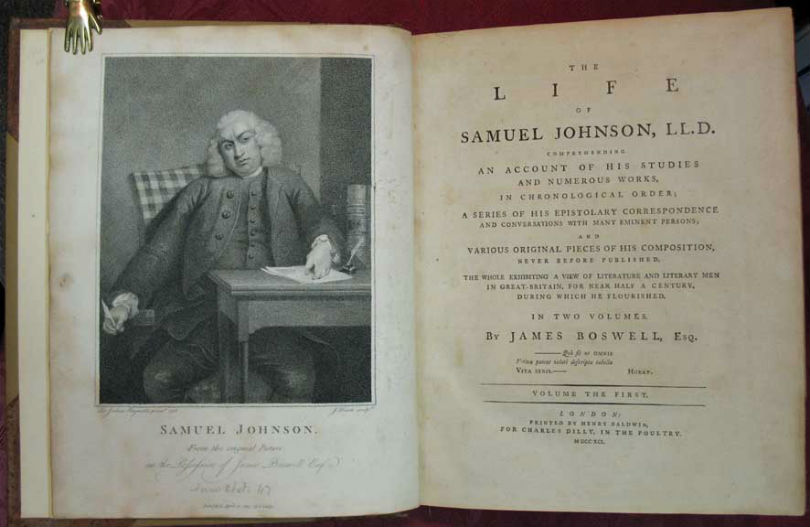
An Untold Story

“We cannot tell the precise moment when friendship is formed. As in filling a vessel drop by drop, there is at last a drop which makes it run over; so in a series of kindnesses there is at last one which makes the heart run over.”—James Boswell, The Life of Samuel Johnson, LL.D.

Boswell’s “Life of Johnson” was published in 1791, a little more than six years after Johnson’s death. It is not a biography as readers may think of a biography: the recounting of incidents from a life of action. The poet W.H. Auden said that writers are “makers, not doers” and thus he, Auden, was not going to write his memoirs. We need biographies of the doers in order to learn what was happening behind the scenes, how close the men of action came to disaster and saved their (and sometimes, our) day, he suggested. Johnson’s life was the life of a man of letters, a life spent writing plays, compiling the first major English dictionary, compiling an edition of Shakespeare’s plays, writing weekly columns on every topic his extraordinary mind could entertain. He was a maker.
Read More
Resentments

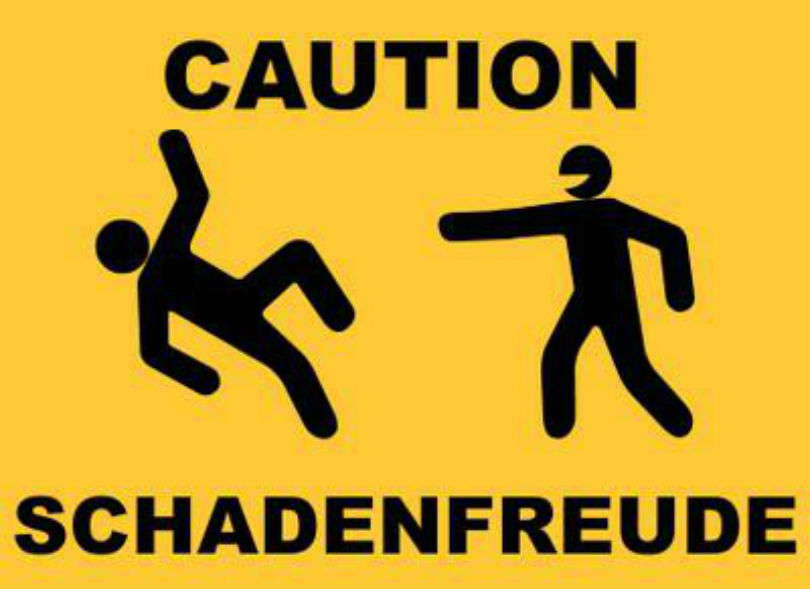
“Resentment is the ‘number one’ offender.” That’s in a book somewhere. Resentments are a form of schadenfreude, one of its many flavors.

The term schadenfreude literally means damage-joy. When one enjoys the news that a rival is encountering trouble, one is experiencing a sense of schadenfreude. Most of us have experienced this feeling at some point in our lives, but most of us also have been jerks at some point in our lives, and the two sometimes come at the same time.

There is no real-world term for its opposite, so some people have begun to use a made-up word, freudenschade, to describe the distress one feels when a friend or rival is doing well or has had a success.
Read More

Auden & Bluffing

In the documentary, “Tell Me the Truth About Love,” W.H. Auden’s friend Thekla Clark recounts the story of one of Auden’s lovers complaining to him that he thought Auden would be more “romantic,” being a poet, after all. “But you aren’t romantic,” Clark quotes the lover telling the poet. “You aren’t romantic at all.”

“If you want romance,” Clark quotes Auden replying, “screw a journalist.” (Except the word used is not “screw.”)

Auden was not one to ruin a good line—or a good night—by spending it an explanation of the difference between the romantic and the sentimental.
Read More