‘The sure extinction that we travel to’

“I don’t know that I ever expected much of life,” Philip Larkin wrote to his lifelong friend Kingsley Amis in October 1979, “but it terrifies me to think it’s nearly over.” He had another six years of life left, but the emptiness of the end—”the total emptiness for ever,/The sure extinction that we travel to”—was much on his mind.

The poem from which those lines originate, “Aubade,” was published in 1977 in the Times Literary Supplement (TLS). Larkin had started it in 1974, worked at it that year, and then left it until 1977, when he finished it. “Death is the most important thing about life,” he wrote his companion, Monica Jones, when they were both still young.

By 1977, he had not been writing much poetry and he had taken to describing his existence in letters to friends as a sort of death-in-life:
Read More
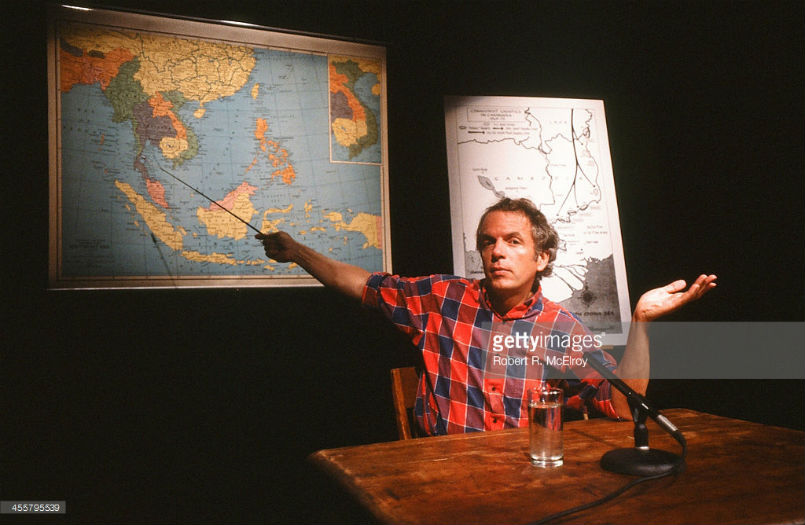
Meeting Spalding Gray

“I began to realize I was acting as though the world were going to end and this was helping lead to its destruction. The only positve act would be to leave a record. To leave a chronicle of feelings, acts, reflections, something outside of me, something that might be useful in the unexpected future.”—Spalding Gray, 1970, The Journals of Spalding Gray

Two friends and I started a theater company in the summer of 1990. Perhaps you have not heard about it; it was kind of a not-at-all-big deal in Poughkeepsie, New York, for almost two entire weeks. Call it ten days.

Our endeavor yielded one sell-out summer night’s performance in the open-air back porch of a bar, a bad review in our local daily newspaper, yet one more (mostly unattended) performance, and a bunch of t-shirts. With grad school beckoning we shut it down, and with time and many residences I lost our newspaper clippings and even eventually forgot the name of the “company” we had started.

My one t-shirt wound up in Spalding Gray’s hands. Spalding Gray was born 75 years ago today, which prompted this recollection of one of my more awkward moments with celebrity.
Read More

Despair Has No Wings …

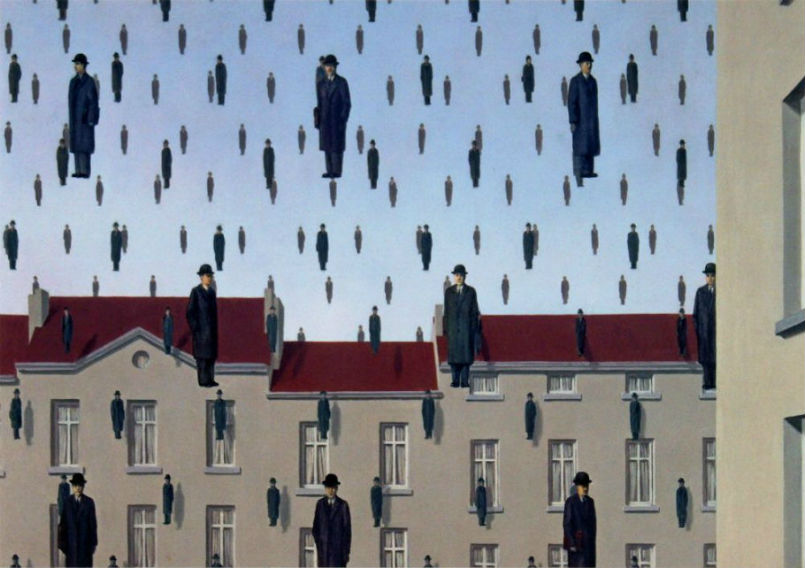
To be is to despair and to despair is to remember the thousand tightly missed connections and not-yet completed conversations that will reveal themselves eventually as never really begun. The Surrealists got despair, perhaps better than most. They adopted Existentialism’s finer frustrations and rendered them with comedy, joy, and horror in sometimes strange proportions.

The comedy of coincidence and the tragedy of imminent abandonment dominate their work. Everyone is always alone, and this fact is simultaneously hilarious and horrifying in Surrealist Art.
Read More