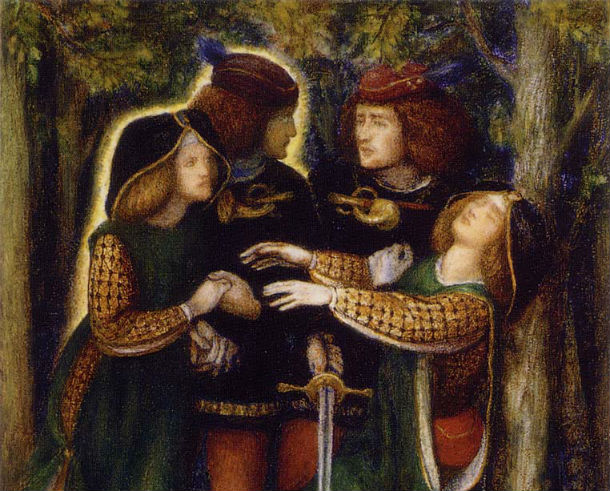
‘So it goes …’

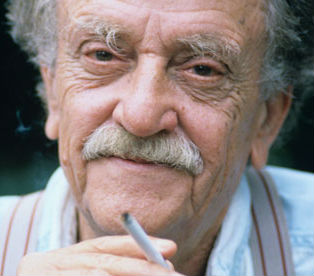
Humans of New York, a website of photos and interviews with New Yorkers, was created and is operated by one young photographer who calls himself simply “Brandon.” It features Sidney Offit today.

Offit is a writer, nearly 90 years of age, who is better-known as a friend of the famous, a memoirist, and a curator of great writing—he helped found the National Book Critics Circle, which gives out one of the top-level book awards each year.

sidneyoffit

Sidney Offit

The caption to the photo at left reads: “Vonnegut said we live too long. He said: ‘You had your children. You wrote your book. Now don’t be greedy.’ Yet we all live with this fantasy of recuperation. We see an old photo of ourself, and we momentarily feel like that person again. We think: ‘I’m going to get back to that place.’ And we never get back there. But that desire gives us the ferocity to hold onto life no matter how bad it gets.”

Offit was great friends with Kurt Vonnegut for four decades. Vonnegut’s birthday is tomorrow, November 11. He would be 92. He lived to be 84 and he considered what he told Offit to be a sort of ideal, but it was one he fell short of again and again, as he published fiction past 75 and opinion pieces until the end.

The accidental beauty of a pacifist writer born on November 11, which is Armistice Day—Veterans Day in the U.S. since 1954—was not lost on the novelist.

In “Breakfast of Champions,” Vonnegut reflected on the coincidence:

So this book is a sidewalk strewn with junk, trash which I throw over my shoulders as I travel in time back to November eleventh, nineteen hundred and twenty-two.

I will come to a time in my backwards trip when November eleventh, accidentally my birthday, was a sacred day called Armistice Day. When I was a boy, and when Dwayne Hoover was a boy, all the people of all the nations which had fought in the First World War were silent during the eleventh minute of the eleventh hour of Armistice Day, which was the eleventh day of the eleventh month.

Kurt-Vonnegut

Kurt Vonnegut, 1922–2007

It was during that minute in nineteen hundred and eighteen, that millions upon millions of human beings stopped butchering one another. I have talked to old men who were on battlefields during that minute. They have told me in one way or another that the sudden silence was the Voice of God. So we still have among us some men who can remember when God spoke clearly to mankind.

Armistice Day has become Veterans’ Day. Armistice Day was sacred. Veterans’ Day is not.

So I will throw Veterans’ Day over my shoulder. Armistice Day I will keep. I don’t want to throw away any sacred things.

What else is sacred? Oh, Romeo and Juliet, for instance.

And all music is.
The moment war ends is not a moment that ennobles the war effort that preceded it, or converts the two opposing sides into concrete moral certainties like right and wrong, but that one minute of peace is sacred. It may have been the only minute of serenity the world has known.

In Vonnegut’s work, remembering the past is sometimes the only way for a character to know that there even is a now. The past, the present, and the future may as well as be characters in his books. Three characters, each of whom considers the other two as being irritating and self-important.

* * * *
Here is a thought that I, Mark, visit and re-visit: I see an old photo of myself and I think I can return there. A previous year, another existence, is merely another place I have visited, lived in, breathed the air of. The 1990s are only as far away as a bus ticket whose price is a bit out of my reach; I think I can visit 1979 as easily as visit Phoenix if I would just save up for a couple months. I am going to see Vermont again, I am going to visit Iowa again; I have not seen the Pacific Ocean yet, but I know I will. Next year, maybe.

I know what the 1980s sounded like, what food tasted like then/there, just as I know what Cedar Rapids, Iowa, or Poughkeepsie, New York, sounds like. The ability to visit one (Poughkeepsie) but not the other (1983) offends me.

* * * *
Now is all we have and Vonnegut knew this, better than most. Reliving the firebombing of Dresden in February 1945 is fine, was necessary for him; coming to understand that February 1945 and November 1918 and November 2014 all co-exist in an eternal now is spiritual, somewhat; finding oneself frustrated at the expense of a bus ticket to 1983 is Hell in its exquisite pointlessness.

In one of his last interviews, recorded in October 2005, Vonnegut told public television’s David Brancaccio the point of it all. What life is too short and too long for.

He said that his wife asked him why he would go to the store for “an” envelope. Apparently he used to make his errands last all day: buy an envelope, bring it home, put the letter in it, bring it to the post office, and then treat the next letter with similar care. Vonnegut:

Oh, she says well, you’re not a poor man. You know, why don’t you go online and buy a hundred envelopes and put them in the closet? And so I pretend not to hear her. And go out to get an envelope because I’m going to have a hell of a good time in the process of buying one envelope.

I meet a lot of people. And, see some great looking babes. And a fire engine goes by. And I give them the thumbs up. And, and ask a woman what kind of dog that is. And, and I don’t know. The moral of the story is, is we’re here on Earth to fart around.

And, of course, the computers will do us out of that. And, what the computer people don’t realize, or they don’t care, is we’re dancing animals. You know, we love to move around. And, we’re not supposed to dance at all anymore.

____________________________________________
The WordPress Daily Prompt for November 10 asks, “Fill in the blank: ‘Life is too short to _____.’ Now, write a post telling us how you’ve come to that conclusion.”

* * * *
Please subscribe to The Gad About Town on Facebook: http://www.facebook.com/thegadabouttown
A Shade of Failure: A Literary Rivalry

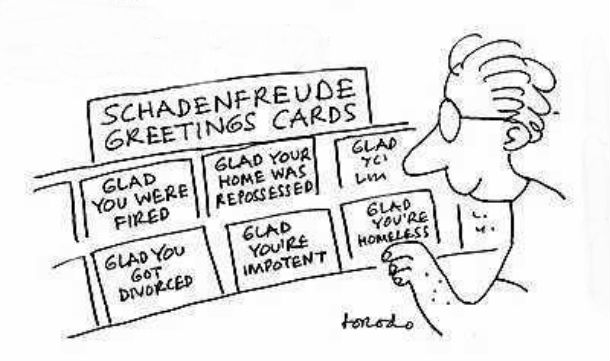
The term schadenfreude literally means damage-joy. When one enjoys hearing that a rival is encountering trouble, one is experiencing a sense of schadenfreude. Most of us have experienced this feeling at some point in our lives, but most of us also have been jerks at some point in our lives, and the two sometimes come at the same time.

There is no real-world term for its opposite, so some people have begun to use a made-up word, freudenschade, to describe the distress one feels when a friend or rival is doing well or has had a success. (One friend recently told me about feeling jealous when they heard that I was publishing this blog right here. “Why does he get to do that?” the friend said that they thought about my writing. Now, this friend also has time to spend on a similar project, but was not. Is not. “Jealous” was the word used.)

gore-vidal

Gore Vidal

Gore Vidal hated a lot of people, and even appeared to take pleasure at his rivals’ distress at his success. He had feelings of schadenfreude over other writers’ freudenschade. (That is as hard to type as it is to say.) Truman Capote was one of his top three hated individuals. Vidal’s mother was number one and Robert Kennedy was probably second, because Kennedy hated him first, seemingly without cause (JFK appeared to enjoy Vidal’s company more than his brother’s), and without end. But Capote …

capote

Truman Capote

Truman Capote was American literature’s lost boy, at least for his generation. He was not the first nor will he be the last, but not many lost souls stick around for as long as he did. His entire published output in life is small, six books, none long, one of which is a novella, “Breakfast at Tiffany’s,” and another is “In Cold Blood,” which is based on a true story. “In Cold Blood” was published in 1966 and was not followed by anything until 1980 when he published a collection of fragments. He died in 1984, aged 59, and his literary executors discovered that the novel he had been promising for years, for which he had been accepting and returning advances with a clock-like regularity, was nothing more than some more sketches and fragments and journal entries and verbal doodles, which they published anyway. It did his reputation more damage than he ever did.

Drugs and alcohol and a need for immediate feedback, which writing long pieces and books does not often provide, produced the sorry sight of a man, unpublished for the last two decades of his life, appearing on TV talk shows in different states of inebriation. He had earned a deserved reputation as a promising young writer in his early 20s, which brought him acclaim and invitations to parties and TV talk show panels. The discovery that he preferred live applause given for a well-told story and loved drinking more than writing was his undoing. Incapable of sitting with himself, a condition many addicts may recognize in themselves, he would sit next to Johnny Carson and slur his way through anecdotes that never sounded truthful and, even better, never were true. The fun would follow in the form of lawsuits.

Vidal and Capote were about the same age (Capote was born in 1924 and Vidal in 1925), had their first novels published at a great young age (Vidal 21, Capote 24), and had a rivalry thrust upon them by the media. Both enjoyed celebrity, but Vidal appeared to enjoy sitting with himself and producing work as much or even more. He seemed to view media appearances and celebrity as a reward for doing the work.

Both knew failure and setbacks. There is a famous quote attributed to Capote, “Failure is the condiment that gives success its flavor.” Being a boy-wonder who fought to remain in the public’s consciousness as still a boy, still a wonder, even into his 50s, Capote’s “success” was of a certain kind, as a person with a famous reputation who felt success(ful) only when a live audience would applaud him as a “writer,” even though he was not writing at all, not in front of them, not when he went home after. Who knows what flavor that condiment brought him?

Vidal was born to a prominent but not wealthy family. He remained unimpressed by fame or prestige, even while being a name-dropper extraordinaire. Capote made up stories to make himself appear intimate with the famous; Vidal crafted ways to distance himself from the important, usually by revealing truths, by name, in his work. Capote was born and raised in poverty. In one of his less kind quotes about his almost rival, Vidal declared, “Truman Capote has tried, with some success, to get into a world that I have tried, with some success, to get out of.”

Some near-kindness for Capote’s ghost, his shade, came out of Vidal long after Capote’s death. In his memoir “Palimpsest,” Vidal re-quotes himself (why take a pass on the opportunity?) and says that he said the above line (about getting in and out of the world of prestige), “unctuously.” He goes on,

Truman was surprisingly innocent. He mistook the rich who liked publicity for the ruling class, and he made himself far too much at home among them, only to find that he was to them no more than an amusing pet who could be dispensed with, as he was when he published lurid gossip abut them. Although of little interest or value in themselves, these self-invented figures are nothing if not tough, and quite as heartless as the real thing, as [he learned].

It is a moment of sympathy, almost of empathy, and it is quickly forgotten in Vidal’s book; in the few sentences in which Capote’s name appears elsewhere, the words “lie” or “liar” are always nearby. If failure is a condiment, schadenfreude is salt, plain and delicious.

The WordPress Daily Prompt for November 4 asks, “If ‘failure is the condiment that gives success its flavor’ (Truman Capote), how spicy do you like your success stories?”

* * * *
Please subscribe to The Gad About Town on Facebook: http://www.facebook.com/thegadabouttown

What Brings YOU Here?

Read More