Lauri Love Banned from Twitter

Lauri Love, the British hacktivist who the United Kingdom has agreed to send to the United States to face charges despite pleas from over 100 MPs that he not be extradited, was permanently banned from Twitter this week. His account was @LauriLoveX.

The reasons are unclear, as no specific charges were fully explained to Love. It is understood that the reasons are related to an “alleged violent threat.” He wrote a few hours ago, “Being an actual Nazi on twitter: fine and dandy. Advocating punching Nazis on twitter: permanently banned for violent threats. This is why we can’t have nice things… (Only told I will never get my account back for obscure probably made-up reasons after starting a dozen support threads.)”
Read More

Lovingly Spammed

“Ashley” from “Supplement Sidekick” wrote to The Gad About Town (me) last week: “I wanted to thank you for this wonderful read!! I absolutely loved every bit of it. I have you book-marked to check out new things you post… .”

She (or he) wrote her (or his) comment on an article that one could describe as “a wonderful read,” if accounts of a threatened beheading of a protester in Saudi Arabia strike one as a wonderful read. Perhaps she (or he) felt that my point of view (I would describe myself as being against beheadings in general, but this might not be the first thing I would tell you about myself on a speed-date) is “wonderful.” She (or he) did not elaborate.
Read More

I, for One, Welcome Our New Robot Overlords

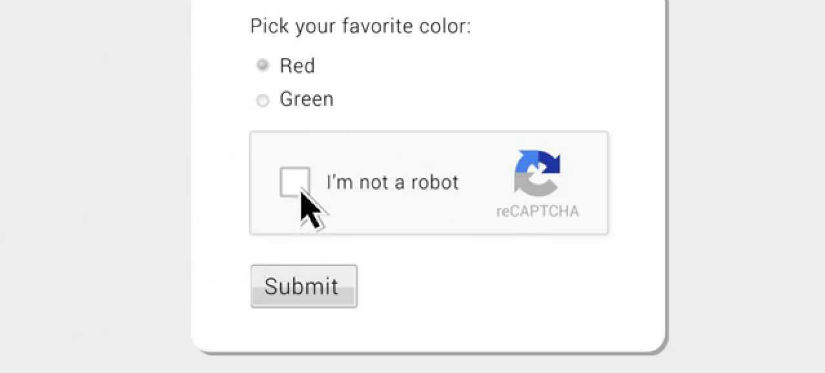
Most if not all of us have seen dialogue box like the one above in our online lives. Sometimes, a real person is called for, even in our heavily automated world. Especially when real money is about to be moved from one virtual hand to another.

About fifteen years ago, some Carnegie Mellon computer scientists developed a method to be employed to differentiate between a human being and a bit of software. They dubbed it, “Completely Automated Public Turing Test To Tell Computers and Humans Apart,” or CAPTCHA. There are several dozen applications commercially available that perform the test.

Some require a user to type in a randomly generated word or number sequence that the app has displayed just for them. Some require a bit less, a simple mouse click inside a box that sits next to a (sometimes) charmingly worded version of the question, “Are you a robot?”
Read More