Lies, Damn Lies, and Ad Sales

The newspaper’s weekly circulation was a closely guarded exaggeration. The circulation manager knew the number, the editorial department knew it, the advertising manager knew it. The newspaper’s circulation was about 2000 copies per week. Now you know, too.

The pliability of the words “circulation,” “copies,” “newspaper,” and “week” was tested regularly. This is because if the advertisers had been told the 2000-per-week number, they might have asked the newspaper to pay them for the honor of placing their ads; thus, they were given a number 10 times larger. More often than not, they were told that over 20,000 pairs of eyes “saw” any given issue of the newspaper. Actually, in an effort at a specificity that would grant legitimacy, they were given a figure of “21,000 readers.”

The word we used was not “subscribers,” it was “readers,” and I may have been the reason for this taint of honesty: even though I was the assistant editor, I was given many tasks over my time there in order to learn the newspaper business, and one week I placed ad calls. I knew that 21,000 was an exaggeration akin to harvests in Soviet provinces distant from Moscow and could not bring myself to repeat it. We did not have 21,000 subscribers: We ordered fewer than 5000 copies from the printer each week. But “readers”? I saw people manhandling copies on line at the supermarket only to return them to the newsstand. They counted, right?

We started to claim 21,000 readers. Each of the four or five communities we covered had populations under 1000, so the only way one could legitimately claim 21,000 anything was by including pets and livestock.

Sometimes, the word was “readership.” We had a “total readership” of 21,000.

Many of our ads were from the local car dealers, so my pang of an honest twinge was not met with an equal bout of honesty from them. They tended to pay late.

Our ad manager was remarkably creative with the set of facts that he made up from the facts that we had. It was a case of a “known known” being treated with the delicate hands of a diamond-cutter. If one fact yields 20 different perspectives, many facets, well, then it is no longer one fact: It is 20 facts. And facts are knowledge, and knowledge is power, so the more facts one knows, the smarter one is.

And math always grants the deployer of facts a sheen of certitude, or in my case when making the phone calls, the nervous luster of flop sweat.

We started the magical addition with the 2000 paid subscriptions, quite a few of which were free, but whatever, these were 2000 real subscriptions and Shhhhh. Each house has an average of three members, so we can assume there are more readers right there. Quite a few of our subscriptions went to doctors’ offices, and who knows how many people thumb through an average issue in those, amIright? These two estimates, home and office, brought us to five digit figure land.

Further, we distributed about three thousand copies to X number of stores and sold quite a few each week through those outlets (in Reality Land, that number varied wildly from week to week). The population in the several counties that these stores were in was Y. Surveying the gas station and grocery store owners at which we sold our newspaper, our ad manager learned their estimates of the average number of customers they deal with each week. Their estimates. Their own exaggerations, um, estimates.

Our ad manager hated when we only came up with enough news to produce a one-section paper. The irrefutable logic was that a multi-section newspaper gets split up, doubling or even tripling the potential readership for that issue.

When I look at my page views and metrics on the website here, I sometimes think about my 21,000-circulation newspaper that covered life in a profoundly rural part of the world. Then I remember one fact, one single fact, that has never been broken up into 20 different facets or perspectives by anyone: I loved that job.

____________________________________________
The WordPress Daily Prompt for October 10 asks, “Time to confess: tell us about a time when you used a word whose meaning you didn’t actually know (or were very wrong about, in retrospect).”

Ten-Minute Answers

I do not know if “1874: First Impressionist Exhibition” is the all-time greatest name for a blog or the 75th greatest name, but it attracted my attention when it appeared in the blogging world a month or so ago.

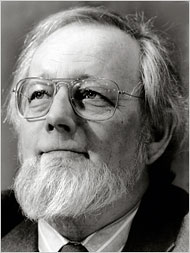
barthelme

Donald Barthelme

The creator usually illustrates her posts with works of art, paintings mostly, from the entire history of art, and is thus compiling a personal version of “The Story of Art.” This caught my eye, as it reminded me a bit of Donald Barthelme, and I think it also raised the bar for my website. (From the start, almost a year ago, I have included music and photos in here; an example: “Beauty is Truth, Truth Beauty.”)

http://1874firstimpressionistexhibition.wordpress.com/2014/10/09/the-liebster-award/

For the third time this week, The Gad About Town has been noticed and given an award, the Liebster award, given by one blogger to another. It is the second Liebster this year and I am very thankful to “1874: First Impressionist Exhibition” for the attention.

In the blogging world, there are some rules of etiquette in the form of paying forward the “Liebster” attention. Here are the rules:

1. Thank the person who nominated you for the award.
2. Display the award on your blog—by including it in your post and/or displaying it using a “widget.”
3. Share 11 facts or things about yourself.

In no order: A. I spend too much time thinking about me. B. Strawberries are my favorite food, and I wish they had protein so they could be a complete meal for carnivorous me. C. Being in recovery makes every day feel like an awards ceremony. D. My love of the number 4. E. Yankees, Giants, Knicks, Rangers. F. When it is fall I think that spring is the best season, and in spring I think that fall is. G. Independent bookstores. H. “Too skinny” my entire life. I. Nascar fan, which no one expects. J. Have not yet owned an mp3 player. K. I want to see Mt. Everest but only see it.

4. Nominate bloggers you admire whose sites have fewer than 200 followers and inform nominees by commenting on their blog.

I am going to repeat something I wrote earlier this week. I have been participating for the last 10 weeks in responding to our WordPress service’s Daily Prompt, which has helped spur my most prolific period of writing since graduate school. (This prolific-ness is a good thing, too, because I am working on a terrific project, due out soon, with another blogger.) Most of the writers with whom I have been communicating regularly, several of whom ask me questions and give me applause every single day, I met via that service. My subscribers have doubled and so has the number of blogs that I subscribe to. Go to the Daily Prompt any day and you will see the several dozen blogs that I read and often like every day.

“1874: First Impressionist Exhibition” is one of the blogs to which I would have given a Liebster Award. A couple others: Joatmon14, A Body of Hope. The under-200 stipulation really is a great and understandable limit, but it truly is limiting.

But, you all get an award! Check under your seats and pass it forward if you would like to.

5. Answer 11 questions posted by the presenter and ask your nominees 11 questions. These are the questions I was given. (This is like being interviewed and this is the part I am only spending 10 minutes on.)

1. What’s the best piece of advice on writing you’ve received?
My first version of any piece of writing is usually an example of over-writing, a case of stating things in a complicated fashion; this is almost always done for comic effect, and then I read it and realize that I am the only audience for the complicated version of the joke. Keep it simple.

2. How often do you write or work on writing (e.g. researching)?
Lately, every day. I was silent for a decade, so perhaps I am catching up on lost time. As I am working on a book, I know that these muscles need exercise.

3. Are you an atheist, agnostic, a believer or something else?
I believe that life is a force that goes on. I do not believe that there is a Big Boss in charge, or that my particular consciousness was around before me or will continue beyond me. But life, whatever that energy is, will. I have a higher power in my life, in that I believe that neither you nor I are figments of my imagination.

4. Do you think this affects your writing?
It has an effect on my outlook on life, so I think that it has an effect on my writing, certainly any personal memoir writing.

5. What’s your favorite book?
“The Secret Parts of Fortune” by Ron Rosenbaum.

6. Who is your favorite author?
James Joyce. Sometimes I think that I like Richard Ellmann’s “James Joyce” more than Joyce, but then I look at “Ulysses” again. Nabokov. I am reading Martin Amis’s newest, out last week, “The Zone of Interest.” Nonfiction: John McPhee.

7. What’s your favorite movie?
“The Maltese Falcon.”

8. Who is the awesomest person you know (or know of), dead or alive?
I am proudest of my sister, for reasons she knows. I can not take my eyes off my girlfriend.

9. How would you define creativity?
Making 2 + 1 = G. But not every time.

10. How long have you been on WordPress?
According to WordPress, since May 2013, but this blog went live in December after starting it on Blogger.

11. Do you write for a living?
Not at the moment …

____________________________________________
The WordPress Daily Prompt for October 9 asks, “10 minutes. You and your keyboard (or smartphone. Or tablet. Or pen and paper). No pauses, no edits, no looking back: it’s free-write time!” And that is why my answers are what they are.

A S(n)ob Tale

“Hi, my name is Mark, and I’m a snob.”

“Hi Mark.”

“I don’t like going into new situations or meeting new people. That means I’m a snob about everything, right? A social snob. If I already have it or know it or know you, I don’t want it or you to be added to or replaced by anything because the new thing or person can’t possibly be as good as the one I know or own.

“But this goes against what I tell myself and what I know from experience is true: that every new person I meet might—in just a few weeks—might be a best friend who I can not imagine life without. Every new person is a friend I am going to feel snobbish about and possessive of in a little while.”

“I think we’ve had a breakthrough. Shake hands with the two people next to you.”

“No.”

* * * *
Snobbishness is my form of insecurity about my own likes and loves; I resist introductions to new things and people (to my detriment, as even I acknowledge, but I resist all the same), as if I am insisting that what I already possess and love is sufficient.

At its most benign, this gives me a collection of quirks. At a bookstore, I do not purchase the book from the top of the pile of identical books. Instead, I find a copy below, as if “my copy” sat there untouched by human hands and unseen by human eyes until I found it. Yet I love used books and their lived-in qualities. My own books appear unread, with the spine uncracked. I do not lend books to people who crack them open, and I know which of my friends treat books in said fashion. In my world, there is a right way to read books.

At its most malignant, this gives me a truly stand-offish air, a self-presentation that of course only serves to reinforce my prejudicial thought that the people I love and the things that I already know are quite fine as they are.

* * * *
De gustibus non est disputandum. Loosely translated, this means, “There is no reason to argue about matters of taste.” There is no fighting over subjective personal likes or dislikes such as colors or sounds. You can not successfully argue me into liking certain smells. I can not punch you hard enough to like what strawberries taste like. I can show you how to make coffee the way I like it, which of course is the only way to make it, but there is no amount of money I can present to you to convince your taste buds to agree with mine.

(Dark roast, half-and-half—I know, I am such an American—enough half-and-half to convince me that the color has changed, even though a painter with a color wheel might be hard-pressed to find the change, so, no, not much half-and-half. Sugar.)

I am aware that there are best practices for using tools and producing things and enjoying many foods and drinks, and I know that these are usually merely socially agreed upon practices developed through experience. They are not universal physical laws or properties of mathematics. They are suggestions. One ought not teach a student to play piano like Chico Marx, but if you meet someone who taught themselves his method, do not urge them to un-learn it.

I took a lot of pride in and occupied too much of my brain with knowing these “best practices”: the best way to make a whatever or know which color goes with which season or which performance of this or that piece of music is the one to enjoy. Knee-jerk snobbishness is the opposite of enjoying something. It is blind and deaf and meekly resistant (no matter how loud the protestations) to the new.

____________________________________________
The WordPress Daily Prompt for October 8 asks, “Even the most laid back and egalitarian among us can be insufferable snobs when it comes to coffee, music, cars, beer, or any other pet obsession where things have to be just so. What are you snobbish about?”