#IStandWithAhmed

They handcuffed the kid.

I for one remember being 14 years old: I spent it overwhelmed. In junior high (7th and 8th grades in my school district at the time), my general proficiency at the whole learning thing bit me where it hurt the most: my ego. My success in 7th grade placed me in advanced classes the next school year that even carried the letter “X” in their name to signify their specialness. “English 8X,” and such.

It overwhelmed me. “Math 8X” was algebra delivered one year early and some geometry offered up two years early, and I nearly flunked. I liked my side projects too much: I wrote all the time, more than was expected or required in my English class by my English teacher, because that is what a 14-year-old who likes a certain subject in school does. I would bring my extra work into class to show my teacher because I could not not think about Math and Science enough that year. My teacher was bright enough to let me read my work in front of class to help me along, because I suspect she knew that my fragile ego needed to know that there indeed were things I could do well.

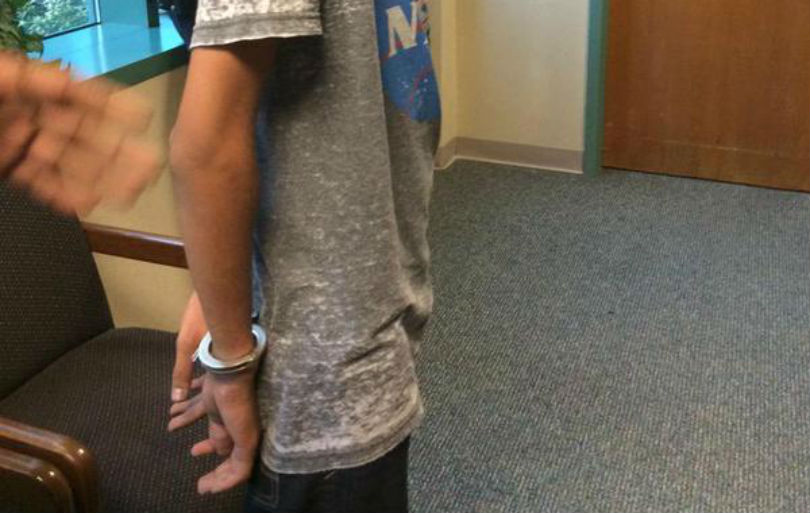
So I understand Ahmed Mohamed, a 14-year-old at MacArthur High School, near Dallas, Texas. He is the opposite of me: he loves science and engineering and devotes whatever extra time he has to tinkering and building things. On Monday, he brought in to school something he had thrown together in 20 minutes: a clock. He was arrested, led out of school in handcuffs by five police officers, and given a three-day suspension, which he is still serving. He was spared spending any time in jail, but he was fingerprinted and locked up in the Irving juvenile detention center. Here is the moment of his arrest (please notice the NASA t-shirt):
Read More

Award Raif Badawi the Nobel Peace Prize

Freedom of speech is the air that any thinker breathes; it’s the fuel that ignites the fire of an intellectual’s thoughts.
 
Many human rights organizations believe that freedom of speech is a basic human right, and they call upon the Arab regimes to reform their policies when it comes to freedom of speech. As a human being, you have the right to express yourself. You have the right to journey wherever your mind wanders and to express the thoughts you come up with along the way. You have the right to believe, and to atone, the same way you have the right to love or to hate. You have the right to be a liberal or to be an Islamist.Raif Badawi, “1000 Lashes Because I Say What I Think

So far in 2015, we have seen journalists beheaded with machetes, a blogger whipped with a cane as an official judicial punishment for his writing, editorial cartoonists gunned down in their office, bloggers hacked to death in Bangladesh, more than 20 journalists detained and even convicted and jailed in Egypt, and journalists detained in America for covering the racism prevalent in every official part of our system. Not a great year.

If you believe freedom of speech is a precious commodity, “the air” we need to breathe, the most dangerous and assertive act you can perform in the name of that freedom is to keep using it, to keep at it. To keep writing.

If the Norwegian Nobel Committee believes that freedom of speech is a precious commodity, believes that those who fight for it and use it in places where it is dangerous to do so rather than in places where it is easy to do so are the people telling every human being’s story, if the Norwegian Nobel Committee respects that fight, it behooves the committee to recognize Raif Badawi’s fight with this year’s Nobel Peace Prize. This is because this is a fight we all might find ourselves in someday, and even if some of us are privileged enough to not be in that fight right now, we must use our voices to support the forcibly silenced.
Read More

‘September 1, 1939’

Shortly before his death, the poet W.H. Auden told talk-show host (and former politician) Richard Crossman, “Nothing I wrote prevented one Jew from being gassed or stalled the war for five seconds.”

At first glance, this places the bar very high for the role of a writer in the affairs of the world, but it is simply a stark assessment of the reality that a writer has no say in the practical matters of life and death. He is not saying that words do not matter but is instead drawing the boundary between where they do matter and where they can not. Writers are makers and not doers, not “men of action,” Auden also liked to say.

One of his most famous poems is September 1, 1939, written to mourn the outbreak of World War II. The title is of course the date Germany invaded Poland. It was written quickly, allegedly that day, was not heavily edited, and published in The New Republic soon after. Auden came to reject the poem and he refused three times to include it in the three editions of his Collected Poems that he oversaw.

He told Crossman that the poem possessed rhetoric that was “too high-flown.”
Read More