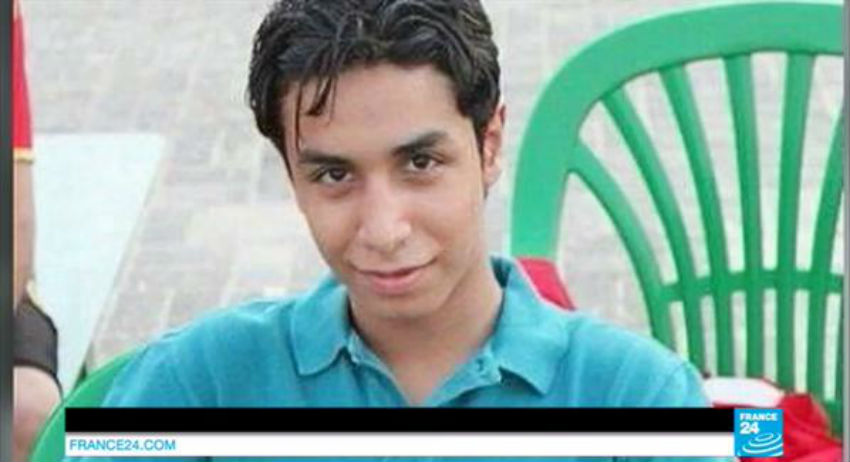
#OpNimr Strikes to #FreeNimr

As of September 28, today, Ali Mohammed al-Nimr‬ has not been beheaded by the justice system of Saudi Arabia.

Human rights activists have not relented in their campaign to somehow pry Ali from this fate, especially with the possibility that the week we are now in was added to his life.

And now hacktivists have stepped in to take action. Several websites in Saudi Arabia—including the site for the Ministry of Justice and the servers of the Saudi Computer Emergency Response Team—were knocked offline this weekend, and members of Anonymous and affiliated groups have revealed that they were behind the attacks on the websites.
Read More

An Imminent Beheading

The United Nations Office of the High Commissioner for Human Rights released a statement Tuesday night urging Saudi Arabia to halt the execution of ‪Ali Mohammed al-Nimr‬ because he was “convicted for a crime reportedly committed as a child.” It is rare that a specific person’s specific case be the subject of such a statement.

The statement reads, “Any judgment imposing the death penalty upon persons who were children at the time of the offence, and their execution, are incompatible with Saudi Arabia’s international obligations.” It reminds Saudi Arabia that it is a party to the UN Convention on the Rights of the Child. Because Ali’s trial was conducted unfairly, the UN OHCHR argues, “International law, accepted as binding by Saudi Arabia, provides that capital punishment may only be imposed following trials that comply with the most stringent requirements of fair trial and due process, or could otherwise be considered an arbitrary execution.” Thus, Ali’s impending execution must be halted and a new trial set up.
Read More

Crucifixion for Protest

No one knows when or where—and it is possible that by the time you read this, the punishment will have been carried out today—but sometime soon, now that it has been learned that an appeal was denied, Ali Mohammed al-Nimr will be beheaded and then his remains will be mounted on two boards and put on display. In his country, this practice is known as “crucifixion.”

It is not a common means of treating a prisoner who has been sentenced to death in his home country. Beheading someone and then displaying the body is reserved only for those who have committed the most heinous of crimes, like show up at a protest.
Read More