Bravery is a skill. I do not know if I have cultivated it in myself. Bravery is, of course, not what one does in the absence of fear but what one can do—what one actually does—when fear is present. [A comment: Today is June 6, 2016. I wrote this essay seven months ago. Sadly, the only update that can be provided is that all the parties described below are, simply, even more brave than they were several months ago.]
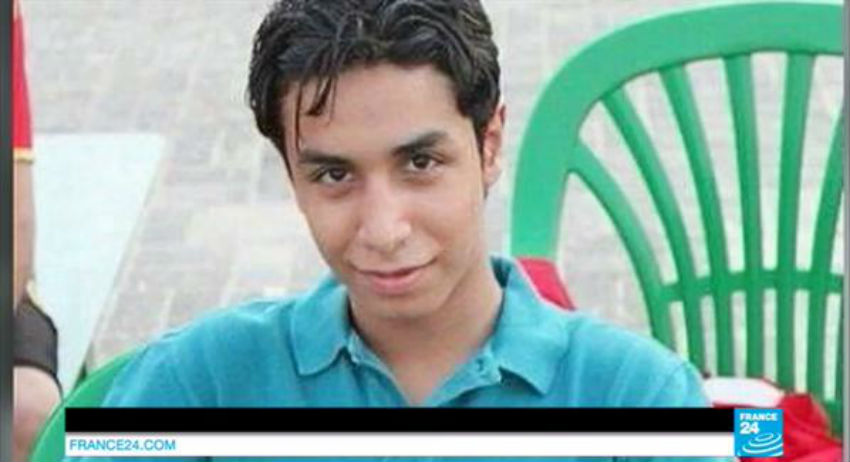
A young man sits today in a prison, awaiting a death sentence to be carried out, quite possibly this week. Ali Mohammed al-Nimr was arrested in 2012 when he was 16 or 17 years of age (both ages have been reported), making him a juvenile at the time of his arrest. He was arrested at a protest. His country is Saudi Arabia, and the protests in 2012 in other autocratic nations in that region had been effective in fostering No government likes protest; his government is violently allergic to it.
At trial, Ali was not given access to the “evidence” amassed against him, in no small part because there was no such evidence. A “confession” was extracted from him. He was convicted, and this is no joke, of stealing every gun and every uniform from a local police station, single-handed.
He was convicted and sentenced to death. Without informing him, an appeals court reviewed his case this summer and that court upheld his guilty verdict and death sentence. He and his family did not know about this until it was announced. He never mounted a defense. His country announced yesterday that this is an internal matter. (It is not, as his nation’s actions and threats of action contravene international agreements concerning human rights that it has signed, as well as simple decency.)
He is to be beheaded, and then his body is to be crucified and displayed to show the world, well, what official cruelty looks like. Of course, one doubts the crucifixion will be publicized, as even Saudi Arabia knows such a punishment is uncommon in the rest of the civilized world. But the display will communicate what a bloodthirsty, autocratic regime wants it to communicate … and to whom it wants it to communicate: future protesters.
Read More
41.399347
-74.271814
Thank you for sharing this via one of these wonderful services:


 The Gad About Town