Lauri Love Loses Battle; The Fight Continues

Don’t crucify our geeks.”Janis Sharp, mother of Gary McKinnon

In a break with a precedent that had been established in 2012, British District Judge Nina Tempia earlier today rejected British student and activist Lauri Love‘s appeal to deny the United States of America’s request to extradite Love to the U.S., where he faces charges. He has the right to appeal the ruling, and Love and all the members of his legal team pledged today that he will appeal. He was allowed to remain free on bond.
Read More

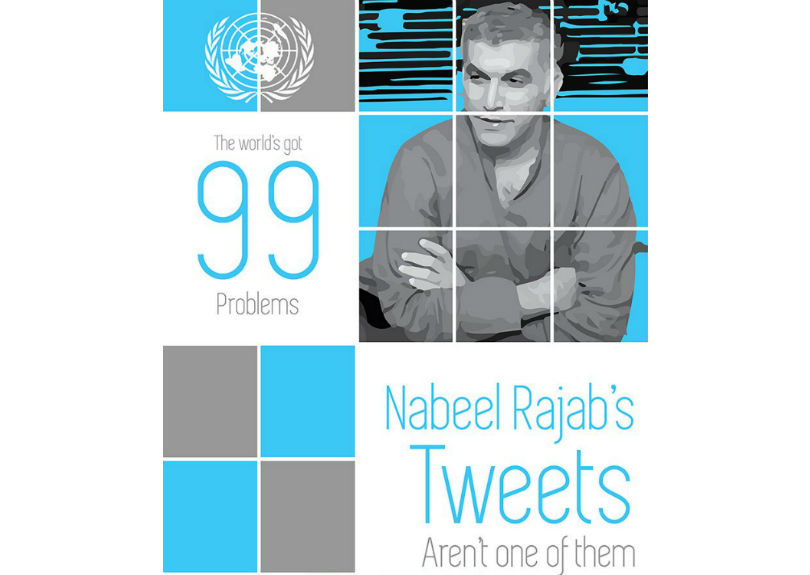
In Prison for Tweets: The Case of Nabeel Rajab

“I would like to ask Mr. John Kerry now: Is this the kind of ally America wants? The kind that punishes its people for thinking, that prevents its citizens from exercising their basic rights?”—Nabeel Rajab, “Letter From a Bahraini Jail,” New York Times, September 4, 2016

* * * *
From the day he was arrested on June 13, Nabeel Rajab, the president of the Bahrain Center for Human Rights, has been kept in solitary detention in conditions so squalid that outside observers have verified the “toilet and shower are unclean, unhygienic, and filled with potentially disease-carrying sludge.”

Because he is a prominent human rights activist who has met with the U.S. Secretary of State, John Kerry, Rajab’s imprisonment—and the vaguely vaporous charges that are being employed to hold him prisoner—has attracted that rare diplomatic act: a public statement from the U.S. State Department about the repression and imprisonment of an individual in an ally’s justice system. (Witness the four-plus years of silence in regards the case of one Raif Badawi, the Saudi writer who remains languishing in prison for his written thoughts, not even his activism.)

State Department spokesman Mark Toner said yesterday: “We’re obviously concerned about Nabeel Rajab’s detention and the charges filed against him, and we call on the government of Bahrain to release him. We have concerns about the state of human rights, in general, in Bahrain, and we’re engaging with the government of Bahrain on all of these issues.” The video (after the jump):
Read More

Shawkan’s Endless Nightmare

When a trial involves more than 700 co-defendants, a person learns quickly that one’s previous understanding of terms like “due process” (as it applies to any nation’s justice system) must be modified or redefined altogether. In a court hearing in Cairo, Egypt, earlier today,the trial of the photojournalist Mahmoud Abu Zeid (“Shawkan”) and the 738 other defendants in the “Rabaa dispersal” case was delayed yet again, this time until October 8.

One of Shawkan’s lawyers reported that the reason cited for the new adjournment was the length of time it is taking the court to examine all the evidence so that it can proceed.

The photo above, of Shawkan in court, is from today. Anyone can see that the waiting is wearying. The trial is trial enough for Shawkan, who is a photojournalist who was arrested in a general roundup of a protest in August 2013. He was a credentialed reporter covering the story of the protest and the crackdown and was arrested in the general chaos of the roundup. He should have been released by the Egyptian authorities within days when they realized what they had done, and his name should not be leading the litany of names of reporters who were arrested for doing their job in recent years.

But more than three years later, Shawkan sits in prison, sometimes in solitary confinement, and he awaits each new, now monthly, delay in the delivery of any news, any change in status, any justice.
Read More