#FreeShawkan

So far in 2015, we have seen journalists beheaded with machetes, a blogger whipped with a cane as an official judicial punishment for his writing, editorial cartoonists gunned down in their office, bloggers hacked to death in Bangladesh, more than 20 journalists detained and even convicted and jailed in Egypt, and journalists detained in America for covering the racism prevalent in almost every official part of our system. Not a great year.

In August, a judge reaffirmed a guilty verdict against three al-Jazeera English journalists. Last month, President al-Sisi pardoned the journalists as a part of the annual Eid holiday tradition of leaders granting pardons. The current regime in Egypt does not much like journalists, and it is estimated that some two dozen writers and photographers are in prison in that country, having been arrested for doing their jobs. Usually, they are charged with “spying,” but more often than not they are detained for months or even years before they even hear why they were arrested or what charges they face.

Mahmoud Abu Zeid is a photojournalist whose work you may very well have seen, as his photographs have appeared in Time magazine and some of them were syndicated by Corbis. (One appears below the fold.) He covered the protests in Tahrir Square and the trial of former president Hosni Mubarak. His professional name is Shawkan. As of today, November 30, 2015, he has spent 838 days in pre-trial detention. His first court session is due to take place on December 12, but his lawyer reports to Amnesty International that he has yet to see Shawkan’s case file. Under Egyptian law, there is a two-year cap on pre-trial detention; 794 days is longer than two years.
Read More

Help End Beheadings: Updated

Update, October 13, 2015: The £5.9 million contract between the Justice Ministry of the United Kingdom and its counterpart in Saudi Arabia, written about here two weeks ago, will be scrapped, according to British news sources.
Read More

Saudi Youths Sentenced to Die: Updated 10/12

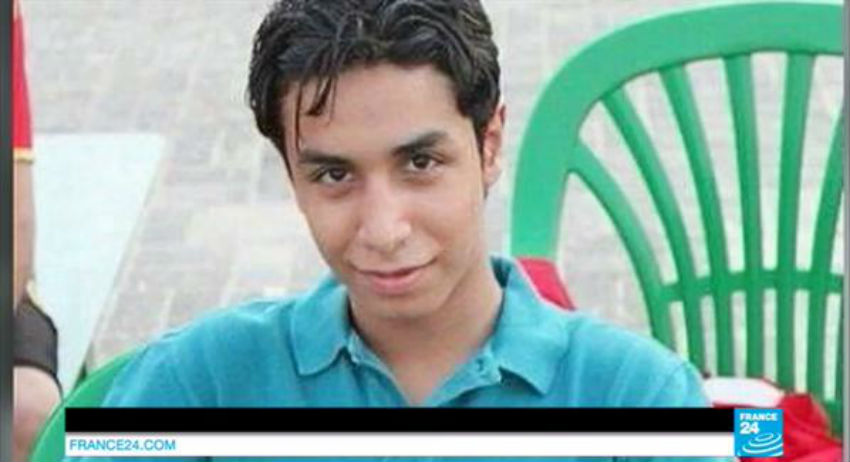
What is known is that as of today, October 12, ‪Ali Mohammed al-Nimr, a 20-year-old Saudi sentenced to death by beheading, has not been beheaded. His body has not been crucified and then displayed, which is the second horrifying part of his sentence. Because corporal and capital sentences in Saudi Arabia are usually implemented on Fridays—after public prayers—dread accompanies the approach of each Friday for friends and family of those sentenced, and then with the confirmation from Ali’s family that his odious sentence was not carried out, a tense non-relief follows. But he is not the only under-age prisoner in Saudi Arabia who has been sentenced to death by beheading.

The European Saudi Organization for Human Rights (ESOHR) has been publicizing three stories: Ali al-Nimr’s and those of Dawood Hussain Almarhoon and Abedallah al-Zaher. All three were arrested before they were 18 years of age, all three have been held in prison since the arrests (each young man was arrested in 2012), and all three have been almost certainly tortured.

As of Saturday, Ali and the other teenagers were moved to the Saudi capital. No advance notice was given to their families, who learned about it after the fact. What this means or portends is not clear.

Ali’s father is quoted in tonight’s Guardian online as saying, “I’m very worried now because they’ve moved my son to a prison in Riyadh and he is in solitary confinement. I expect that this can only mean bad news and I fear he could be executed at any moment. Dawoud al-Marhoon also faces the same fate as my son, but so do six others. So in total there are eight young men who have been sentenced to death. My son is completely innocent.”
Read More