#OpParis, Day 2

The mainstream media has started to take Anonymous more seriously than it has in the past in the last two days. Part of this is born of the mainstream media’s continuous pursuit of an “Us vs. Them” narrative, and part of this comes from the human need to find someone to cheer for in this dark, bloody time.

Here is The Hill, a daily in Washington, DC: “Anonymous claims it has eliminated 5,500 ISIS Twitter accounts.” Here is Rory Cellan-Jones of the BBC, who landed an interview with “the person behind the #OpParis Twitter account” (@opparisofficial, by the way): “Anonymous takes on IS.” Cellan-Jones’ interview was conducted by email, not on camera, and was not recorded.
Read More

Ali al-Nimr: A Chilling Update

It was confirmed this week that the conviction of and death sentence for Mohammad Suwaymil was upheld in a Saudi appeals court this month. He is one of seven individuals arrested for protest in Saudi Arabia—including Ali Mohammed al-Nimr—and his case was the last one against the seven that had not been heard all the way through the appeals process; with that announcement, reports came out from some of the prisoners’ families that conditions have been made even worse for each of the seven.

Whether or not any of them know what has transpired in Saudi Arabia’s legal system, whether or not any of them know they are being treated as a group inside that legal system, each man seems to know that a horrible end is now within sight. By the time you read this, these seven men: Sheikh Nimr Baqir al-Nimr, Ali Saed Al-rebeh, Mohammed Faisal al-shyookh, Dawood al-Marhoon, Abed allahhassan al-Zaher, Ali Mohammad al-Nimr, and Mohammad Suwaymil, may already have been beheaded and their dead bodies put on display, crucified.
Read More

A Bloodthirsty System

In a police state, the presumption is that if one is arrested, one has done wrong. No defense can be mounted for a person who stands accused in a system that is as divorced from logic, grants no respect to human decency, lacks human rights as one that assumes an accusation is the same thing as guilt.

Police states force anyone accused of a crime to mount an argument against the logic that makes arguing a crime. It is also common for justice systems in police states to keep the accused wondering what exactly they have been charged with or will be charged with, which makes mounting an appropriate or effective defense almost impossible. Important matters like evidence or the lack of evidence are rendered moot.

Saudi Arabia is only one such nation; there are others, certainly.

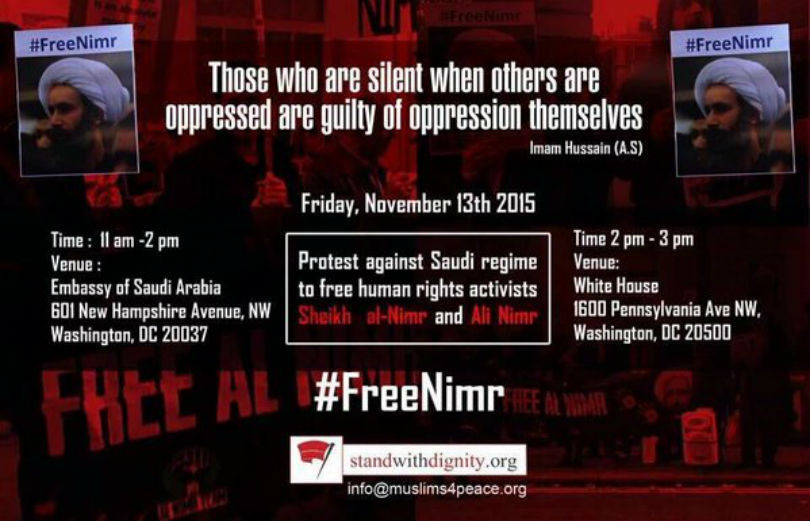
The case of Ali Mohammed al-Nimr in Saudi Arabia has attracted much attention in recent months, in this website and elsewhere. The young man was arrested at a protest and charged with so many crimes of such scale and scope that it would be comically impossible for one person to have committed them. He was arrested as a youth and treated as an adult, which flouts international conventions. Nonetheless, Ali was convicted and sentenced to die by public beheading; furthermore, after the beheading, his body is to be publicly displayed, crucified, to show him, to show others like him, to show the world … well, what exactly? I do not know.
Read More