‘Taking pictures isn’t a crime’

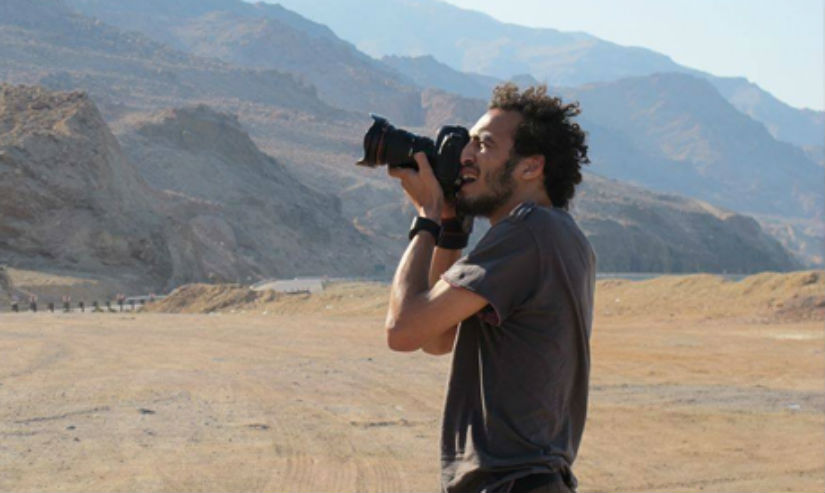
The second hearing in the trial of the 739 defendants facing charges related to the “Rabaa sit-in” in Egypt, a trial that includes the photojournalist Mahmoud Abu Zeid (“Shawkan”) will be held in a few hours on Tuesday, June 28, tomorrow.

Today it was announced that the National Press Club in Washington, DC, will honor Shawkan with one of this year’s two 2016 John Aubuchon Press Freedom awards. NPC President Thomas Burr said, “Shawkan’s case exemplifies the draconian way Egyptian authorities have cracked down on the press. Egypt is one of the world’s top jailers of news professionals, and the situation there is not improving.”

Because there are so many defendants, the trial is being conducted in a special building constructed for mass trials. It is outside Tora Prison near Cairo.

For two years, Shawkan was held without knowing what the charges against him are; in March, he and his lawyers finally learned that he faces nine charges that range from “joining a criminal gang” to “murder.” From the moment he was arrested on August 14, 2013, till March of this year, he did not know that he faces execution if he is convicted. Charged with murder, Mahmoud Abu Zeid is in a fight for his life. For taking photos.

He has been in jail for almost three years now.
Read More

#FreeLauriLove

Lauri Love has not yet set foot in the United States. Certain parties in America—the NSA and the U.S. Justice Department—want to change this for the 31-year-old Briton. They want to extradict him to the U.S. to face an as-yet unknown number of charges, which have been filed in three districts.

It is a complicated legal case that involves different laws in two different countries, the United Kingdom and the U.S.
Read More

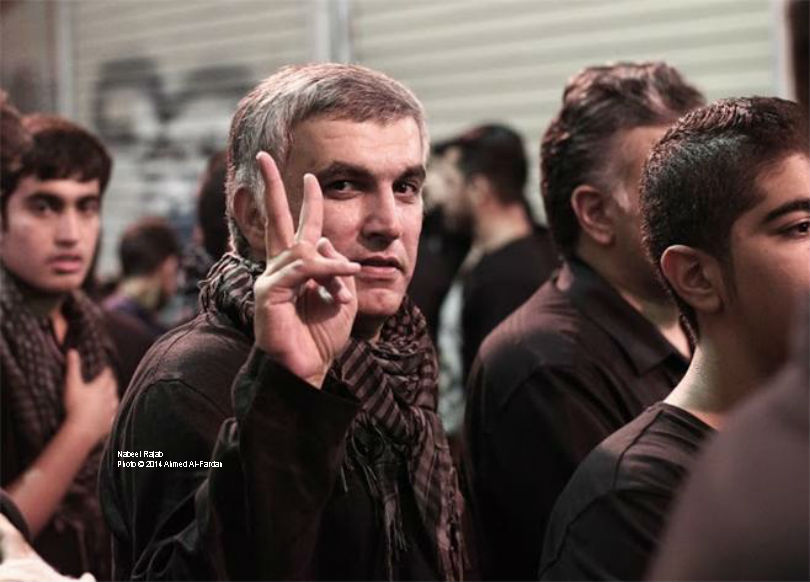
On Trial for Tweets: Nabeel Rajab

One of the inadvertent effects of Bahrain’s current campaign of aggressive repression against those it deems dissidents is the simplest one: Bahrain validates the dissidents, proves their testimonies of brutality, physical and psychological torture, and repression one-hundred percent correct.

Almost two weeks after Nabeel Rajab, the president of the Bahrain Center for Human Rights, was arrested, he finally learned today what he is charged with: two violations of Bahrain’s penal code, violations of articles 133 and 216, which carry a combined maximum sentence of 13 years in prison. The charges stem from Tweets that he published last year. Tweets. His first hearing will be July 12.

One of the other effects, of course, is this: Bahrain’s campaign of repression stokes dissent, and dissenters become easier to identify, arrest, attempt to silence. Right now, Bahrain is making life dangerous for thousands of people as it places a choke-hold on parts of its population: Shia, human rights activists, those people unlucky enough to not be born in the ruling Al Khalifa family.
Read More